
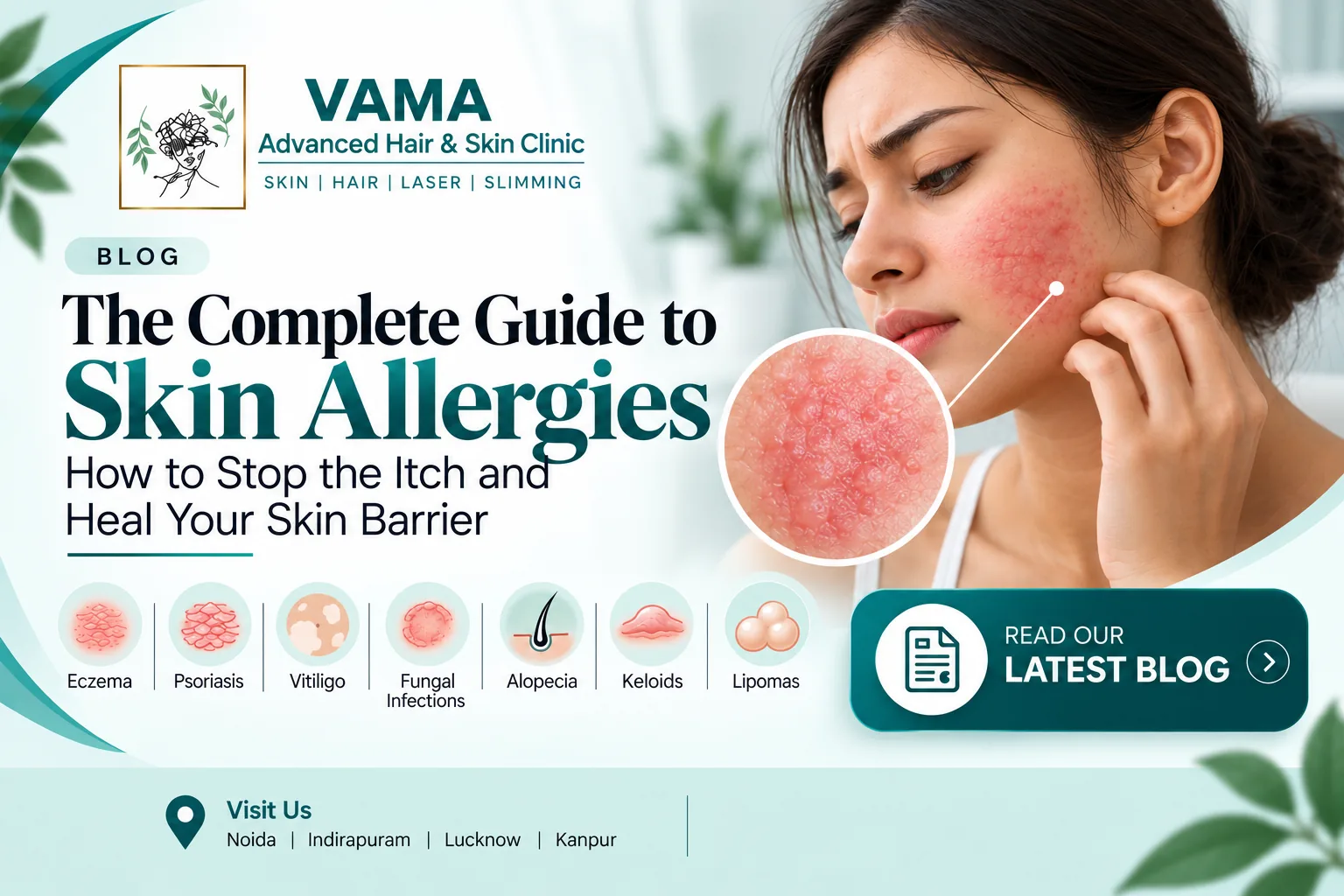
Skin allergies rarely show up at a convenient time. A sudden rash, relentless itching, or patches that just won't heal can disrupt your sleep, your confidence, and your daily routine. What makes skin allergies particularly tricky is that they aren't one condition — they're a broad category covering everything from mild irritation to chronic autoimmune disorders, each requiring a different approach to treat effectively.
This guide breaks down the most common skin allergy conditions, what causes them, and how proper treatment can help you stop the itch and repair your skin barrier for good.
Understanding Your Skin Barrier
Your skin barrier is the outermost layer of protection your body has against irritants, allergens, bacteria, and moisture loss. When this barrier is compromised — due to genetics, environmental triggers, or an overactive immune response — your skin becomes more reactive, inflamed, and prone to conditions like eczema, psoriasis, and fungal infections.
A weakened skin barrier doesn't just cause discomfort; it creates a cycle where irritation leads to scratching, scratching leads to further damage, and further damage makes your skin even more vulnerable. Breaking this cycle requires the right diagnosis and a targeted treatment plan — not just generic moisturizers or over-the-counter creams.
Common Skin Allergy Conditions and How They're Treated
Eczema
Eczema, or atopic dermatitis, causes dry, itchy, inflamed patches that often appear on the hands, face, elbows, and knees. It's typically triggered by allergens, weather changes, stress, or irritants, and tends to flare up in cycles. Effective Eczema Treatment usually combines medicated creams to reduce inflammation, intensive moisturizing therapy to restore the skin barrier, and identification of personal triggers to prevent future flare-ups.
Psoriasis
Unlike eczema, psoriasis is an autoimmune condition where the immune system speeds up skin cell production, causing thick, scaly, red or silvery patches. It commonly affects the scalp, elbows, knees, and lower back. Psoriasis Treatment in indirapuram often involves a combination of topical medication, phototherapy, and in more severe cases, oral or biologic medication to control the immune response from within. Since psoriasis is chronic, ongoing management matters more than a one-time fix.
Vitiligo
Vitiligo causes the skin to lose its natural pigment, resulting in white or light patches, usually because pigment-producing cells stop functioning properly. While not physically painful, it can affect confidence significantly. Vitiligo Treatment in Noida options range from topical medications and light therapy to more advanced procedures, depending on how widespread the patches are and how the condition is progressing.
Fungal Infections
Fungal skin infections thrive in warm, moist environments and often appear as itchy, red, ring-shaped patches, commonly on the feet, groin, or skin folds. They're common but frequently mistreated with the wrong products, allowing them to spread or return. Proper Fungal Infection Treatment requires identifying the exact type of fungus involved and using targeted antifungal medication for a long enough duration to fully clear the infection — not just calm the visible symptoms.
Alopecia
Alopecia refers to hair loss caused by an autoimmune reaction, where the body's immune system mistakenly attacks hair follicles, leading to patchy or widespread hair loss. It can affect the scalp or other parts of the body, and severity varies significantly between individuals. Alopecia Treatment typically includes topical or injectable medications to reduce inflammation around the follicles, along with treatments to stimulate regrowth where possible.
Keloids
Keloids are raised, thickened scars that form when skin overheals after an injury, piercing, or even acne. They can be itchy, tender, or cosmetically bothersome, and tend to grow larger than the original wound. Keloid Treatment may involve corticosteroid injections to flatten the scar, laser therapy, or surgical removal combined with treatments to prevent recurrence, since keloids have a tendency to return if not managed properly.
Lipomas
While not an allergy, lipomas are often grouped with other skin concerns since they present as soft, movable lumps beneath the skin. These benign fatty growths are usually harmless but can be uncomfortable or cosmetically unwanted depending on their size and location. Lipoma Removal is a straightforward outpatient procedure that permanently removes the growth, typically with minimal downtime.
Why a Proper Diagnosis Matters?
Because so many skin conditions share overlapping symptoms — redness, itching, patches, flaking — self-diagnosing based on internet searches or trial-and-error with random creams often makes things worse before they get better. A rash that looks like eczema could actually be a fungal infection, and treating it with the wrong medication can allow it to spread or become resistant to treatment.
This is why an accurate diagnosis from an experienced dermatologist is the real starting point for healing, not the treatment itself. A thorough skin assessment helps identify:
- The exact condition you're dealing with
- Possible triggers or underlying causes
- The most effective treatment combination for your specific case
- A realistic timeline for improvement
Everyday Habits That Support Skin Healing
Alongside professional treatment, certain daily habits can support your skin barrier and reduce flare-ups:
- Moisturize consistently, especially after bathing, to lock in hydration
- Avoid harsh soaps and hot water, which strip natural oils from the skin
- Identify and avoid personal triggers, whether it's certain fabrics, foods, or products
- Manage stress, since it's a known trigger for many chronic skin conditions
- Stay consistent with prescribed treatment, even after symptoms improve, to prevent relapse
When to See a Dermatologist
If you've been dealing with persistent itching, unexplained patches, recurring rashes, or a skin issue that isn't improving with basic care, it's time to consult a specialist rather than continuing to self-treat. Chronic conditions like psoriasis, eczema, vitiligo, and alopecia tend to respond far better to early, targeted treatment than to a "wait and see" approach.
Final Thoughts
Skin allergies and chronic skin conditions can feel overwhelming, especially when the itching and visible symptoms affect your daily confidence. But with the right diagnosis and a treatment plan built around your specific condition — whether that's eczema, psoriasis, vitiligo, a fungal infection, alopecia, keloids, or a lipoma — real, lasting relief is possible.
Healing your skin barrier isn't about quick fixes; it's about consistent, informed care guided by a professional who understands exactly what your skin needs. If your symptoms have been persistent, don't wait it out — book a consultation with an experienced dermatologist and take the first real step toward calmer, healthier skin.
Book a free consultationHave a question about this?
Talk to one of our specialists directly — no obligation.
Book a Consultation