
Most people spend weeks researching techniques and surgeons, then almost no time thinking about what comes after the procedure. Yet the recovery period decides how well your grafts settle, how comfortable you feel and how good the final result looks.
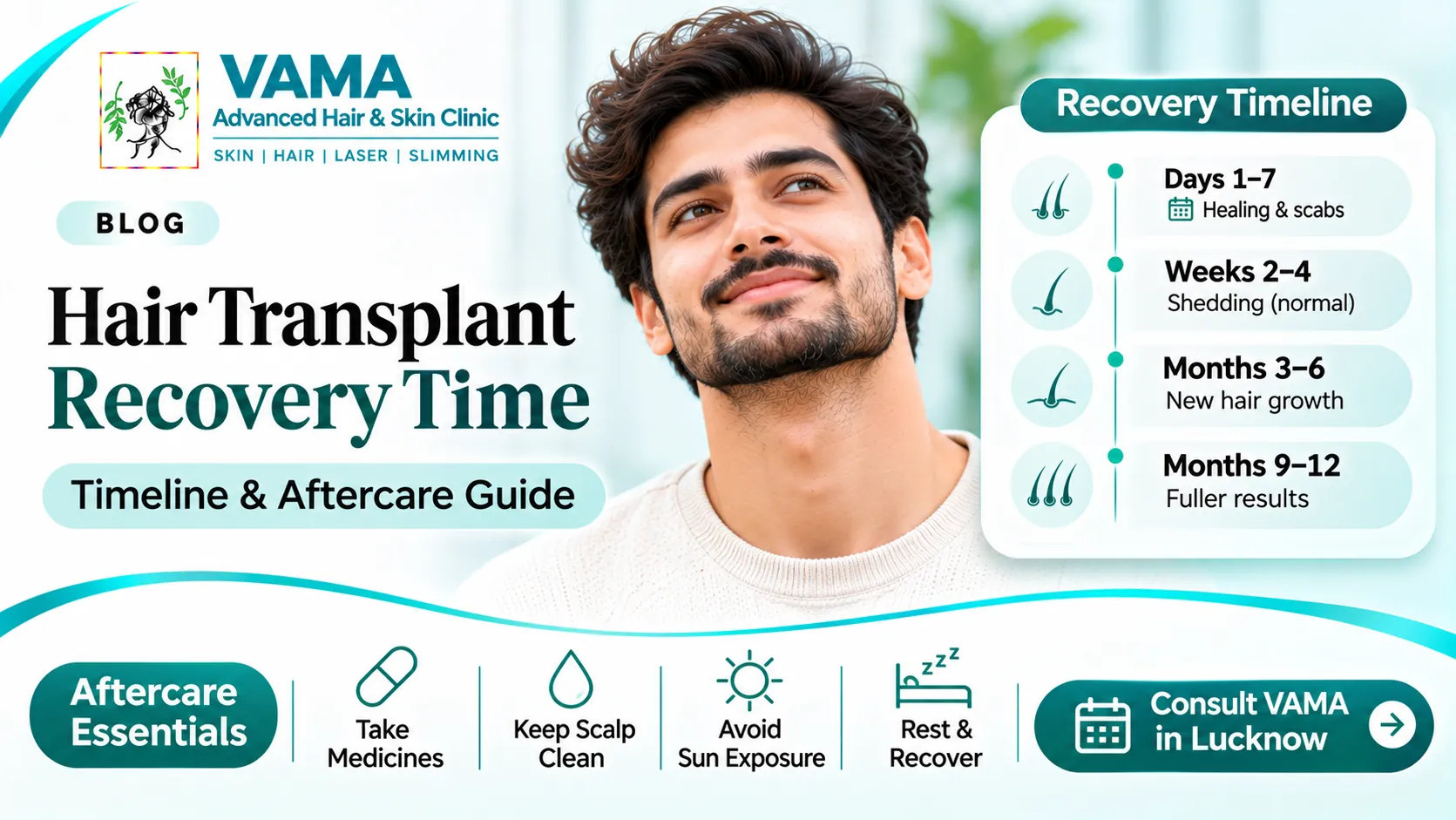
The short answer is that the scalp usually heals visibly within one to two weeks, new hair starts to appear around the third or fourth month, and the full result takes about nine to twelve months. This guide covers each stage in detail, with practical aftercare advice. If you are planning surgery at a hair clinic Lucknow, reading it first will help you prepare.
Recovery Time vs Hair Growth Time
People often mix up two different things:
- Healing time is how long your scalp takes to settle after surgery. This is mostly the first two weeks.
- Growth time is how long the transplanted follicles take to produce visible hair. This takes many months.
Healing is the part you can influence most through aftercare. Growth is mostly biology, and it cannot be rushed.
Day-by-Day Recovery Timeline
Every patient heals differently, but this is a typical pattern.
Day 1 to 3: The Settling Phase
Expect mild swelling, redness and tenderness in both the recipient and donor areas. Forehead swelling is common and can sometimes spread toward the eyes. It usually peaks around days two to four and then settles. Rest, keep your head slightly elevated when sleeping and take medicines exactly as prescribed.
Day 4 to 7: Scabs Form
Small scabs form around each graft. The grafts are still fragile, so do not scratch, rub or pick at them. Your doctor will explain how to wash gently and when to begin.
Day 7 to 14: Scabs Fall Off
Most scabs loosen and fall off within one to two weeks. Redness fades, and the scalp begins to look closer to normal. Most people return to desk work within a few days, though heavy activity still needs to wait.
Week 2 to 4: Shedding Begins
The transplanted hair shafts shed. This looks alarming, but it is expected. The follicles remain alive under the skin and are resting before they restart growth. Some existing hair near the transplanted area may also shed temporarily, which is called shock loss.
Month 1 to 3: The Quiet Phase
There is little visible change. Some patients feel disappointed here, but this is simply the resting phase. Stay patient and keep your follow-up appointments.
Month 3 to 4: First New Hair
Fine, soft and sometimes uneven hairs start to appear. Small bumps may appear in some patients, and they usually settle on their own. Tell your doctor if they bother you.
Month 5 to 9: Visible Thickening
Hair grows longer and thicker, and the hairline starts to look more defined. Most patients feel the transplant is clearly working during this stage.
Month 9 to 12 and Beyond
Most of the result is visible around nine to twelve months. Some patients, especially those with larger sessions, continue to improve up to eighteen months.
| Stage | What to expect |
|---|---|
| Days 1 to 3 | Swelling, redness, tenderness |
| Days 4 to 7 | Scabs form |
| Days 7 to 14 | Scabs fall off |
| Weeks 2 to 4 | Transplanted hair sheds |
| Months 3 to 4 | First new growth |
| Months 5 to 9 | Thicker, longer hair |
| Months 9 to 18 | Final result |
What Affects Your Recovery?
- Surgeon technique and graft handling: gentle extraction and careful placement reduce trauma to the scalp.
- Size of the session: larger sessions may mean more swelling and a slightly longer healing period.
- Your general health: diabetes, thyroid problems, anemia and poor nutrition can slow healing.
- Smoking and alcohol: both reduce blood flow and can delay healing, so most doctors advise avoiding them around surgery.
- Following aftercare: this is the factor entirely in your control.
- Skin and scalp type: some people simply heal faster than others.
Aftercare Tips That Protect Your Grafts
Follow your doctor's washing schedule
Wash with the products and technique your clinic recommends, usually using gentle pressure and lukewarm water. Do not rub.
Pat dry, never rub
Use a clean, soft towel or tissue and press lightly.
Sleep with your head elevated
For the first few nights, use extra pillows to reduce swelling. Avoid sleeping on the recipient area.
Protect your scalp from sun and dust
Lucknow's summer heat and dusty roads can irritate a healing scalp. Cover your head loosely as advised, and avoid crowded, dusty places early on.
Take medicines on time
This includes antibiotics, painkillers and any supplements your doctor has prescribed.
Eat well
Protein, iron, zinc and vitamins support healing. Do not start random supplements unless your doctor advises them.
Stay hydrated and rest
Your body heals best when it is rested and well fed.
Attend every follow-up
These visits let your doctor catch problems early.
What to Avoid in the First Few Weeks
- Scratching, picking or touching the grafts
- Strenuous exercise and heavy lifting, until your doctor allows
- Swimming pools, saunas and steam rooms
- Direct sun exposure on the scalp
- Tight caps and helmets, unless your doctor says they are safe
- Smoking and alcohol
- Hair dyes, gels and chemical products on the scalp
- Medicines like aspirin or blood thinners, unless prescribed
Your clinic's written instructions come first. If they differ from general advice, follow theirs.
Normal Symptoms vs Warning Signs
Usually normal
- Mild swelling, redness and itching
- Small scabs and flaking
- Numbness around the donor or recipient area
- Shedding of transplanted hair in the first month
- Small pimple-like bumps during growth
Contact your doctor if you notice
- Increasing pain, heat or swelling after the first few days
- Pus, discharge or a bad smell
- Fever
- Bleeding that does not stop
- Severe, persistent itching or rash
- Very slow growth well beyond twelve months
Most issues are minor when caught early, so it is always better to ask.
Can Plasma Therapy Help During Recovery?
Some doctors suggest PRP alongside a transplant. In this treatment, a small sample of your blood is processed to concentrate platelets, which are then injected into the scalp. The aim is to support follicle health and the scalp environment during healing.
If you are exploring plasma therapy for hair in Lucknow, ask your doctor how many sessions are suggested, when to schedule them around surgery and what results are realistic. PRP is a supportive treatment. It may help some patients, results vary, and it cannot replace a transplant in areas that have lost hair completely.
How Your Choice of Doctor Affects Recovery?
Recovery starts before surgery. A careful scalp assessment, gentle technique, sterile setup and clear aftercare plan all shape how smoothly you heal. This is why the choice of surgeon matters so much.
When you search for the best hair transplant doctor in Lucknow, look beyond advertising. Check these points:
- 1Qualifications and training: hair transplantation is a surgical procedure and should be planned by a qualified, registered medical professional.
- 2Direct involvement: ask who performs each step, from design to extraction and implantation.
- 3Honest diagnosis: a good doctor tells you if you do not need surgery, or if PRP or medicine should come first.
- 4A written aftercare plan: you should receive clear instructions and know who to call if you have a concern.
- 5Hygiene: look for a clean, sterile setup with single-use consumables.
- 6Realistic expectations: be careful with promises of "100% results" or "permanent coverage in one session".
If you are comparing hair transplant doctors in Lucknow, meet more than one if you can, and ask each the same questions about technique, graft numbers, recovery and follow-up. The top hair transplant surgeon in Lucknow for you is the one who examines your scalp carefully, explains the plan clearly and gives you time to decide.
Frequently Asked Questions
Many people return to desk work within a few days, though swelling or scabs may make you prefer a week off. Ask your doctor for advice based on your job.
Final Thoughts
Hair transplant recovery is a short healing phase followed by a long waiting phase. The first two weeks need careful aftercare, the first three months test your patience, and the real result appears over the next year. Following your doctor's plan, protecting your scalp and attending follow-ups give your grafts the best chance of doing well.
If you are considering surgery, start with a proper consultation. A good clinic will examine your scalp, explain your options, give you a realistic timeline and support you through every stage of recovery.
Have a question about this?
Talk to one of our specialists directly — no obligation.
Book a Consultation