
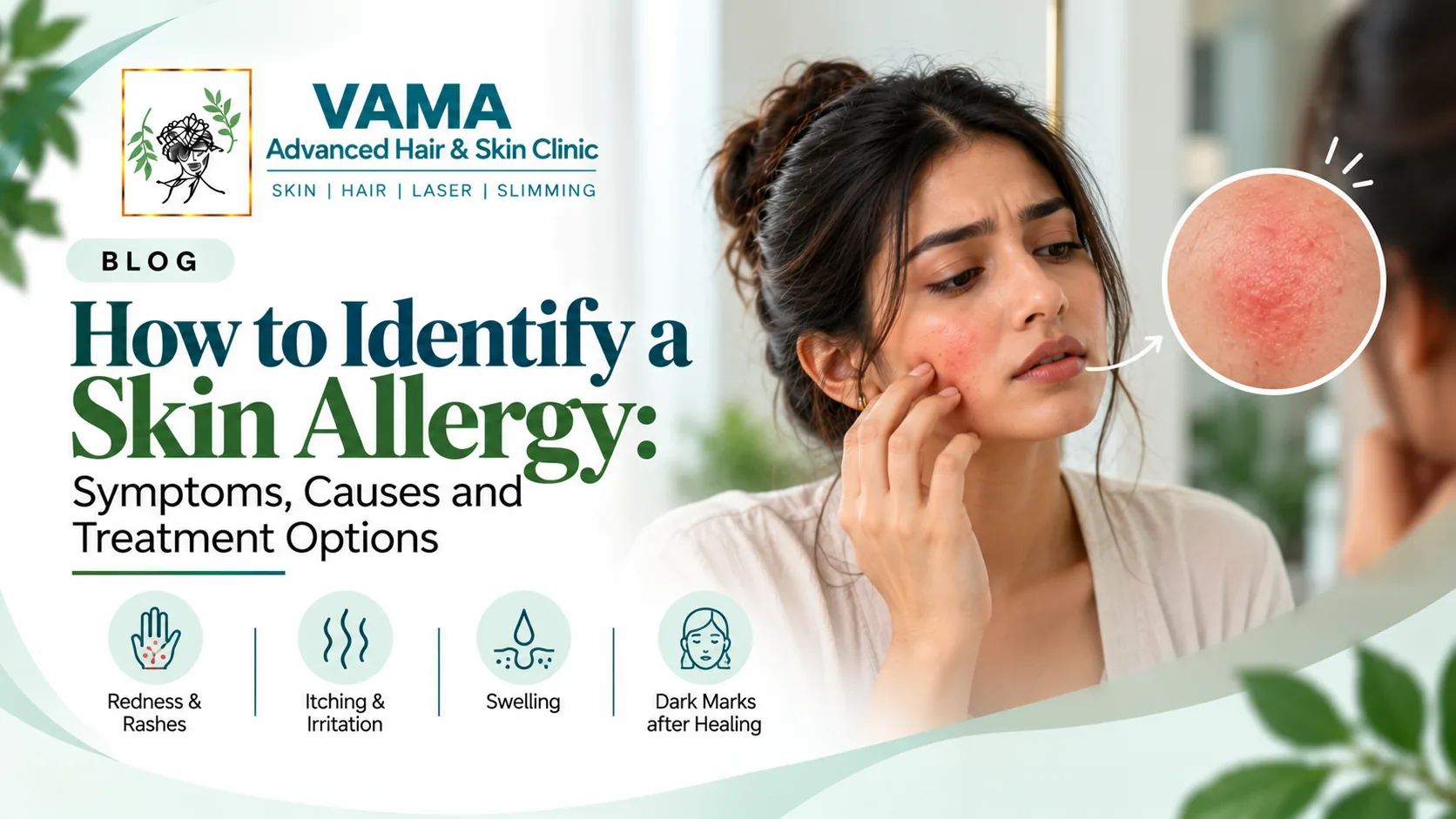
Allergy treatment is an important consideration for people experiencing dark spots, uneven skin tone or pigmentation marks after skin inflammation. Skin allergies can cause itching, redness, rashes and irritation, and in some cases, the inflammation may leave dark marks after healing. Understanding the symptoms, causes and available treatment options can help you manage skin concerns more effectively.
If you experience persistent skin irritation or allergy, consulting a qualified professional can help you understand the underlying cause and choose a suitable treatment approach. Learn more about skin care services at VAMA Clinics.
What Is a Skin Allergy?
A skin allergy occurs when the immune system reacts to a substance that it considers harmful, even if the substance is harmless to most people. This reaction can cause inflammation, redness, itching and other skin symptoms.
Skin allergies can affect people of all ages. Some reactions appear shortly after contact with an allergen, while others develop over several hours or days.
Common allergy-related skin conditions include:
- Contact dermatitis: Skin inflammation caused by contact with an irritating or allergenic substance.
- Hives (urticaria): Raised, itchy welts that may appear suddenly.
- Atopic dermatitis (eczema): A chronic condition associated with dry, itchy and inflamed skin.
- Cosmetic-related reactions: Skin irritation or inflammation caused by certain ingredients in personal care products.
Identifying the condition correctly is important because different skin problems may look similar but require different treatments.
Common Symptoms of a Skin Allergy
Recognizing the symptoms of a skin allergy can help you decide when to seek professional advice.
1. Itching and Irritation
Persistent itching is one of the most common signs of a skin allergy. It may affect the face, hands, arms, neck or other body areas. Scratching can worsen irritation and increase the risk of infection.
2. Redness and Skin Rashes
Allergic reactions may cause red patches, bumps or an uneven rash. The affected skin may feel warm, sensitive or uncomfortable. If a rash spreads or repeatedly returns, medical evaluation may be necessary.
3. Swelling
Some reactions cause swelling around the eyes, lips or the area exposed to an allergen. Sudden swelling of the lips, tongue or throat, particularly with breathing difficulties, requires emergency medical attention.
4. Dryness, Scaling and Flaking
Certain skin conditions cause dryness, roughness and peeling. Repeated exposure to triggers can weaken the skin barrier and make it more sensitive.
5. Blisters or Oozing Skin
Some allergic rashes develop small blisters or areas of weeping skin. Avoid popping blisters or applying non-prescribed creams, as these may worsen the condition.
6. Dark Marks After Inflammation
After a rash heals, some people develop dark patches or uneven skin tone. This is called post-inflammatory hyperpigmentation and can be more noticeable in people with darker skin tones.
A dermatologist can determine whether the marks are related to previous inflammation and whether skin allergy treatment in Lajpat Nagar may be appropriate.
What Causes Skin Allergies?
Several environmental and personal care factors can trigger allergic reactions.
1. Cosmetics and Skincare Products
Perfumes, preservatives, hair dyes, makeup and certain skincare ingredients may trigger allergic contact dermatitis. Even products used previously without problems can sometimes cause a reaction.
Introduce new products carefully and stop using any product that repeatedly causes redness, itching or swelling.
2. Soaps, Detergents and Cleaning Products
Strong detergents, household cleaners and fragranced soaps may irritate the skin or trigger allergic reactions. People who frequently wash their hands or handle cleaning chemicals may be more susceptible to irritation.
3. Dust, Pollen and Environmental Allergens
Environmental allergens can contribute to symptoms in susceptible individuals. However, not every rash associated with environmental exposure is caused by a true skin allergy.
4. Metals and Jewelry
Nickel in jewelry, watches, belt buckles and clothing fasteners is a recognized cause of allergic contact dermatitis. The rash usually appears where the metal touches the skin.
5. Certain Medicines
Some medicines can cause skin reactions. If a rash appears after starting a new medicine, contact a healthcare professional for advice rather than stopping prescribed medication without guidance.
How to Identify a Skin Allergy Correctly?
Skin allergies can resemble fungal infections, psoriasis, eczema and other dermatological conditions. Correct identification helps ensure appropriate treatment.
Observe When Symptoms Begin
Notice whether symptoms appear after using a new cosmetic, changing detergent, wearing particular jewelry or coming into contact with a substance at work.
Check the Location of the Rash
The rash's location may provide clues. For example, irritation beneath a watch strap may indicate a reaction to metal, while a rash around the hairline may be associated with hair products.
However, the location alone cannot confirm a diagnosis.
Maintain a Symptom Diary
Record when symptoms appear, which products you use and whether particular activities make them worse. Photographs can also help a dermatologist assess changes over time.
Seek Professional Evaluation
A dermatologist may examine your skin and review your medical history. Depending on the suspected cause, patch testing or other investigations may be recommended.
Avoid repeatedly applying steroid, antifungal or combination creams without appropriate medical advice.
Skin Allergy Treatment Options
The correct treatment depends on the type of reaction, its severity and the substance responsible.
1. Avoid the Trigger
Identifying and avoiding the allergen is often an important step. Use suitable fragrance-free products, protect your skin when handling irritants and avoid substances that have previously caused a reaction.
2. Use Gentle Skincare Products
Mild cleansers and fragrance-free moisturizers can support the skin barrier. Avoid harsh scrubs, exfoliating acids and strongly fragranced products while your skin is inflamed.
Cool compresses may temporarily relieve itching and discomfort.
3. Follow Medical Treatment Recommendations
A healthcare professional may recommend topical medication or antihistamines, depending on the diagnosis. The appropriate medicine and duration of use should be discussed with a qualified clinician.
Severe, widespread or recurring reactions require medical assessment.
4. Seek Help for Persistent Symptoms
If symptoms continue despite avoiding suspected triggers, professional evaluation may help identify the underlying problem.
People searching for allergy treatment in Lajpat Nagar should look for an appropriate medical assessment and a treatment plan based on their symptoms. You can review the services listed on the VAMA Clinics Allergy Treatment page.
Skin Allergy and Pigmentation: What Is the Connection?
Skin allergies and pigmentation are different concerns, but inflammation caused by an allergic rash can sometimes leave dark marks after healing.
Post-inflammatory hyperpigmentation occurs when inflammation stimulates excess melanin production. These marks may gradually fade, although the process can take several months or longer.
People with persistent dark patches should first establish whether the underlying skin condition has resolved.
When Should You Consider Pigmentation Treatment?
Pigmentation treatment may be worth discussing with a dermatologist if dark marks remain after the original inflammation has settled. The appropriate approach depends on the cause, skin type, severity and whether the skin is still irritated.
A dermatologist may recommend sun protection, suitable topical products or selected in-clinic procedures where appropriate. Treatment should be individualized because aggressive exfoliation or unsuitable procedures can worsen pigmentation.
Avoid using bleaching products or strong skin-lightening agents on an active allergic rash without professional guidance.
Finding Allergy Treatment in Lajpat Nagar
If you experience recurring rashes, itching, redness or unexplained irritation, choosing an appropriate healthcare provider can help you receive a suitable diagnosis and treatment plan.
When researching an allergy doctor in Lajpat Nagar, consider the following factors:
- Qualified professionals: Check the clinician's qualifications and relevant expertise.
- Individual assessment: Treatment should reflect your symptoms, medical history and possible triggers.
- Clear guidance: You should understand how to use prescribed products and when to return for follow-up.
- Attention to recurring symptoms: Persistent reactions may require further evaluation.
- Safe skincare advice: Recommendations should account for your skin sensitivity and allergy concerns.
People searching for an allergy clinic in Lajpat Nagar should check the clinic's services, clinician qualifications and suitability for their specific condition.
Similarly, an allergy doctor in Lajpat Nagar may help assess recurring symptoms and determine whether additional investigations are needed.
If you are specifically looking for skin allergy treatment in Lajpat Nagar, prioritize accurate diagnosis, trigger management and a treatment plan suited to your condition.
You can review allergy clinic in Lajpat Nagar and contact the clinic to confirm the availability of the appropriate consultation and treatment.
How to Prevent Future Skin Allergies?
Although not every allergic reaction can be prevented, the following steps may reduce exposure to common triggers:
- 1Read product labels: Check the ingredients in cosmetics, soaps and personal care products.
- 2Introduce products carefully: Avoid starting several new skincare products simultaneously.
- 3Moisturize regularly: Use a suitable moisturizer to support your skin barrier.
- 4Protect your skin: Wear appropriate gloves when handling known irritants.
- 5Avoid scratching: Scratching can worsen inflammation and contribute to infection or dark marks.
- 6Use sun protection: Broad-spectrum sunscreen can help prevent existing pigmentation from becoming darker.
- 7Seek help for recurring reactions: A medical assessment may identify triggers that are difficult to recognize yourself.
If you develop a widespread rash, significant pain, fever or signs of infection, seek prompt medical advice. Breathing difficulties or swelling of the tongue or throat require emergency care.
Frequently Asked Questions (FAQs)
Common early symptoms include itching, redness, swelling, bumps or a rash. Symptoms may appear quickly or develop over several hours or days.
Conclusion
Pigmentation treatment may help address persistent dark marks and uneven skin tone, but the first step is to identify and manage any underlying skin inflammation. Understanding the symptoms, causes and treatment options for skin allergies can help you make informed decisions about your skin health.
If you experience recurring rashes, itching or pigmentation concerns, seek an appropriate professional assessment. For more information, visit allergy treatment in Lajpat Nagar and confirm the available consultation options.
Have a question about this?
Talk to one of our specialists directly — no obligation.
Book a Consultation