
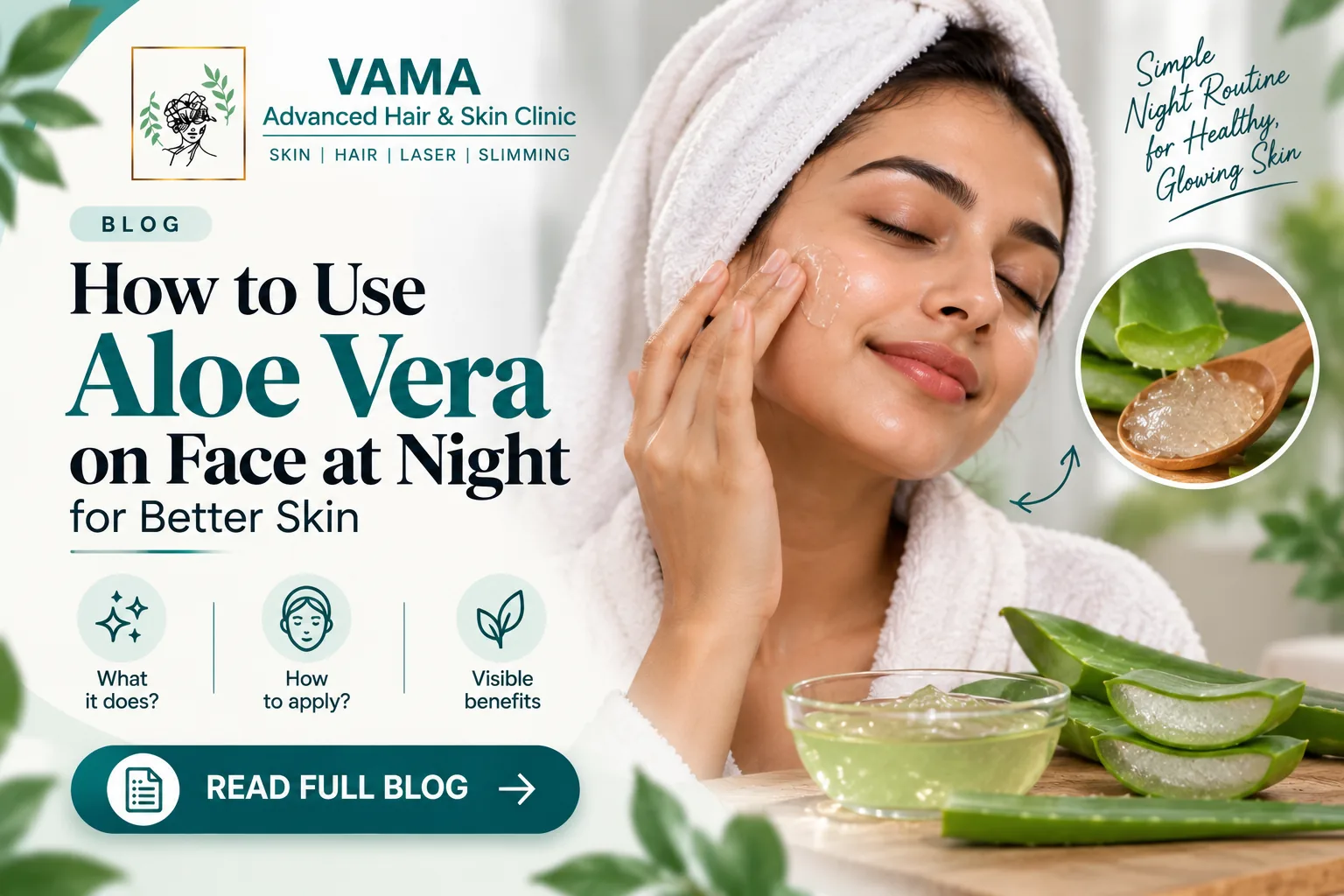
A simple nighttime skincare routine can help keep the skin feeling comfortable, hydrated and refreshed. Among natural skincare ingredients, using aloe vera on the face at night is a popular choice because aloe gel has soothing and moisturizing properties. It can be especially appealing for people who want a lightweight addition to their evening routine.
However, using aloe vera correctly is important. Fresh aloe vera, commercial aloe gel and aloe-based skincare products can differ in texture and formulation, and not every skin type responds in the same way. If you have sensitive or acne-prone skin, it is always sensible to patch-test a new product first.
In this guide, we explain how to use aloe vera on the face at night, whether you can leave it on overnight, how long it should stay on the skin, and how it may fit into routines for acne, dry skin and dark spots.
What Makes Aloe Vera Popular for Nighttime Skincare?
Aloe vera gel contains a high amount of water and is commonly used in skincare products designed to soothe and moisturize the skin.
At night, skincare products can be applied after cleansing because the skin is free from makeup, sunscreen and much of the day's accumulated dirt and oil.
A simple aloe vera overnight routine may help:
- Provide lightweight hydration
- Make the skin feel softer
- Soothe skin that feels dry or uncomfortable
- Support a simple nighttime skincare routine
- Reduce the feeling of tightness associated with dryness
These benefits can vary depending on the individual and the type of aloe product being used.
How to Use Aloe Vera on Face at Night
If you want to try aloe vera as part of your evening routine, keep the process simple.
Step 1: Cleanse Your Face
Start by washing your face with a gentle cleanser suitable for your skin type. This removes makeup, excess oil, sunscreen and surface impurities. Avoid aggressively scrubbing the skin before applying aloe vera, particularly if your skin is sensitive.
Step 2: Pat the Skin Dry
Gently pat your face with a clean towel. You do not need to completely dry the skin if you prefer applying skincare while it is slightly damp.
Step 3: Apply a Small Amount of Aloe Vera
Take a small amount of aloe vera gel and spread a thin layer across the face. Avoid applying a thick layer — more product does not necessarily mean better results. Be careful around the eyes and lips unless the particular product is specifically formulated for those areas.
Step 4: Allow It to Absorb
Give the aloe gel a few minutes to settle into the skin. If the product feels sticky or uncomfortable, you may be using too much.
Step 5: Follow with Moisturizer if Needed
People with dry skin may want to apply a suitable moisturizer after the aloe gel has absorbed. This can create a more complete nighttime routine: cleanser, then aloe vera gel, then moisturizer. If you use additional skincare products, introduce them carefully rather than applying many new products at once.
Can You Leave Aloe Vera on Face Overnight?
Yes — some aloe vera products are designed as leave-on skincare products and can be left on the face overnight. However, this does not mean every type of aloe vera should automatically be left on the skin all night.
Commercial aloe vera gels may contain additional ingredients, preservatives or fragrances, so always check the product directions.
Fresh aloe vera also needs care. The yellowish latex found near the outer part of an aloe leaf can irritate some people's skin, so simply cutting a leaf and applying its contents directly is not necessarily the best approach.
If you experience burning, itching, redness or irritation, wash the product off and discontinue use.
How Long Should Aloe Vera Stay on the Face?
There is no single duration that works for everyone. If you are trying aloe vera for the first time, apply a small amount and observe how your skin reacts. A product intended as a leave-on gel can generally be used according to its label instructions.
For an aloe vera face mask at night, the recommended duration depends on the ingredients used. A homemade or rinse-off mask should not automatically be treated like a leave-on product.
The key is to follow the formulation instructions rather than assuming that keeping aloe vera on the skin longer will produce better results.
Aloe Vera for Acne: Can It Help?
Aloe vera is often discussed for acne because of its soothing properties. However, it should not be considered a complete acne treatment. Acne can develop due to several factors, including excess oil production, clogged pores, inflammation and hormonal influences — a basic aloe gel may provide a soothing or hydrating step, but it does not address every cause of acne.
For occasional blemishes, a simple skincare routine may include:
- Gentle cleansing
- A non-comedogenic moisturizer
- Appropriate acne-focused ingredients
- Sun protection during the day
- Aloe vera, if your skin tolerates it
If acne is persistent, painful, widespread or leaving marks, professional evaluation may be more appropriate than relying only on home remedies.
Explore our Acne Scar Treatment optionsAloe Vera for Dry Skin
Aloe vera can be a useful lightweight hydrating step, particularly when the skin feels tight or uncomfortable. However, aloe gel alone may not provide enough moisture for very dry skin.
A better nighttime routine for dry skin may involve:
- 1Gentle cleanser
- 2Aloe vera gel, if tolerated
- 3A moisturizer containing suitable moisturizing ingredients
- 4A richer barrier-supporting product, if recommended
The goal is not simply to add water to the skin but also to help reduce moisture loss. If dryness continues despite a consistent routine, it may be worth discussing the problem with a qualified skincare professional.
Aloe Vera for Dark Spots
Many people search for aloe vera for dark spots, hoping it will lighten pigmentation naturally. Aloe vera can be soothing and may have a place in a gentle skincare routine, but it should not be presented as a guaranteed solution for pigmentation or dark spots.
Dark spots can have different causes, including acne marks, sun exposure, hormonal changes and other skin conditions — treating the underlying cause is important.
Daily sunscreen is particularly important when managing pigmentation, because UV exposure can contribute to persistent or worsening dark spots. If pigmentation does not improve or keeps returning, a dermatologist can help determine the cause and recommend appropriate treatment.
Fresh Aloe Vera on Face: Is It Safe?
Using fresh aloe vera on the face is popular in home skincare, but natural does not automatically mean risk-free.
If you use aloe directly from a plant, the leaf should be handled carefully — the yellow latex portion should not simply be mixed with the clear gel and applied to the face. Fresh plant material can also become contaminated if it is not prepared and stored hygienically.
For people with sensitive skin, a properly formulated commercial product may be easier to use because its ingredients and intended application are clearly stated. Always perform a patch test before applying a new aloe product over the entire face.
Aloe Vera Face Mask at Night
An aloe vera face mask at night can be a simple occasional skincare option. For example, a suitable aloe-based mask can be applied according to its instructions and removed after the recommended time.
Avoid combining aloe vera with numerous kitchen ingredients simply because they are marketed as natural skincare remedies — ingredients such as lemon juice or abrasive substances can irritate the skin. A simple routine is often preferable to a complicated one.
If your skin becomes red, itchy, burning or unusually uncomfortable after a mask, rinse it off and stop using it.
A Simple Aloe Vera Overnight Routine
If your skin tolerates aloe vera, an uncomplicated evening routine can look like this:
Evening
- 1Cleanse — remove makeup, sunscreen, sweat and excess oil
- 2Apply aloe vera — use a thin layer of a suitable gel
- 3Moisturize — apply moisturizer according to your skin type
- 4Sleep — let your nighttime skincare products remain on the skin as directed
Morning
Cleanse or rinse according to your skin's needs, moisturize, and apply broad-spectrum sunscreen before going outdoors. Consistency matters more than repeatedly adding new products.
When Should You Avoid Aloe Vera?
Aloe vera may not suit everyone. Consider avoiding it or seeking professional advice if:
- You have previously reacted to aloe products
- Your skin is extremely sensitive
- You develop redness, itching or burning after application
- You have an unexplained rash or active skin irritation
- A product contains ingredients you know your skin cannot tolerate
Before using fresh aloe or a new skincare product, a small patch test can help identify potential irritation.
Aloe Vera and Professional Skincare
Home skincare can be useful for maintaining basic skin comfort, but persistent concerns may require a more personalized approach. VAMA Solution takes a broader approach to skin and hair care, where the right routine or professional treatment depends on each individual's skin condition, concerns and goals.
Aloe vera can be one part of a routine, but it should not replace professional assessment when a skin problem is persistent or worsening.
Frequently Asked Questions
Cleanse your face, apply a thin layer of suitable aloe vera gel, allow it to absorb and follow with moisturizer if needed. Always follow the product's instructions.
Conclusion
Using aloe vera on the face at night can be a simple addition to a skincare routine when your skin tolerates it. It may provide lightweight hydration and a soothing sensation, but it is important to use the right product and avoid assuming that natural ingredients are suitable for everyone.
Whether you choose fresh aloe vera or a formulated gel, start with a small amount, patch-test first and follow the product directions. For concerns such as persistent acne, significant dryness, pigmentation or recurring irritation, professional guidance can be more useful than relying exclusively on home remedies.
A good skincare routine does not need to be complicated. Gentle cleansing, appropriate moisturization, sun protection and consistency are often more important than using a large number of products.
Book a free consultationHave a question about this?
Talk to one of our specialists directly — no obligation.
Book a Consultation