
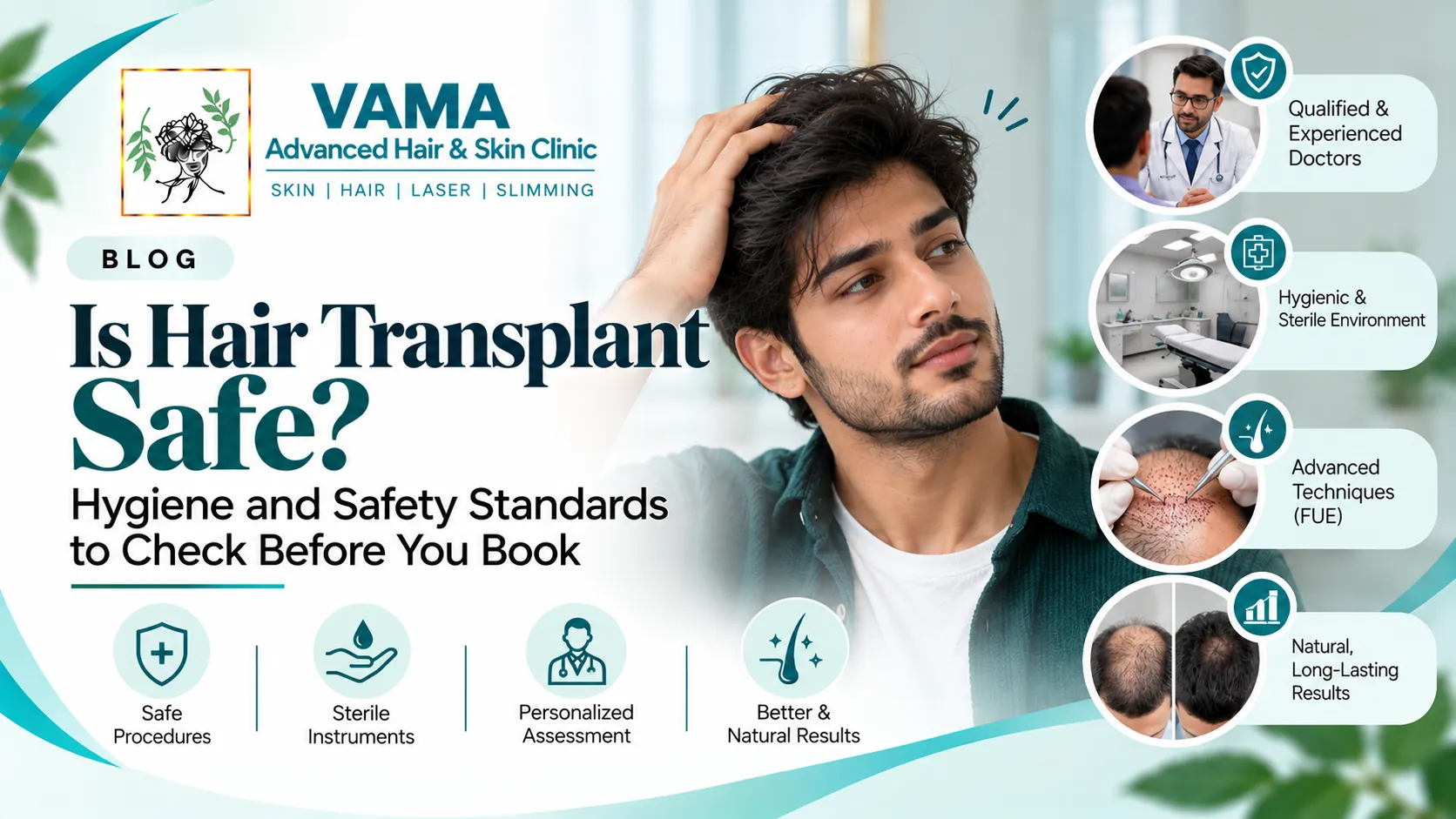
News of complications after cosmetic procedures has made many people hesitate before booking a hair transplant. That caution is healthy. A hair transplant is a surgical procedure, and like any surgery it deserves a clinic that treats safety as the foundation, not an afterthought.
The reassuring part is that a properly planned procedure, performed by trained professionals in a clean, well-run setting, is generally considered safe. The risks tend to rise when corners are cut: unqualified operators, reused instruments, rushed planning or no proper diagnosis.
This guide explains the real risks, the standards that reduce them, and a practical checklist you can use at any clinic. If you are considering an FUE Hair Transplant in Indirapuram, it will help you ask better questions and judge the answers.
What Are the Risks of a Hair Transplant?
Most patients heal without trouble, but you should know what can go wrong so you can recognize a careful clinic when you see one.
Infection
Any procedure that creates tiny openings in the skin carries some infection risk. Contaminated instruments, an unclean environment or poor aftercare raise it. Signs include spreading redness, increasing pain, swelling, warmth, pus or fever, and they need prompt medical attention.
Poor Graft Survival and Unnatural Results
Grafts are living tissue. If they are handled roughly, kept out of the body too long or placed at the wrong angle, fewer will grow and the result may look patchy or unnatural. A badly designed hairline is hard to correct later.
Donor Area Damage
Overharvesting, meaning taking too many follicles from the back of the scalp, can leave visible thinning in an area that was supposed to be your permanent supply.
Reactions to Anesthesia or Medication
Local anesthesia is routine, but it must be given by trained staff who know your medical history. Allergies, heart conditions and certain medicines all matter.
Temporary Side Effects
Swelling, scabbing, redness, numbness and itching are common and usually settle. Shedding of transplanted hairs in the first weeks is normal, and growth follows over the coming months.
Why Diagnosis Is a Safety Step, Not a Formality
Safety starts before anyone picks up an instrument. Hair loss has many causes, including genetics, hormones, thyroid problems, nutritional deficiencies, stress, scalp conditions and medication. A transplant treats permanent pattern baldness, but it will not fix an underlying medical cause.
A responsible consultation covers:
- Your medical and family history, including medicines and allergies
- Examination of the scalp and the pattern of loss
- Magnified scalp assessment of donor density and hair health
- An honest discussion of whether surgery is right for you at all
Operating on someone who does not need surgery, or who is not yet stable enough for it, is a safety failure in itself.
Sometimes the right answer is not a transplant. A well-planned Hair Loss Treatment approach might include medication, nutritional correction or non-surgical therapies, and a good clinic will say so even when it means no surgery.
The Hygiene Standards That Matter
You are entitled to ask how a clinic keeps procedures safe. These are the areas worth asking about.
Sterile Instruments
Instruments that touch the scalp should be either single-use or properly sterilized between patients. Ask how this is done and whether you can see the packaging being opened.
A Clean Procedure Environment
The room should look and feel clinical: clean surfaces, tidy equipment, and staff in appropriate protective wear. If the setting feels casual or crowded, take note.
Hand Hygiene and Protective Gear
Gloves, masks and clean gowns, changed appropriately, are basic requirements and should not be negotiable.
Safe Handling of Grafts
Extracted follicles should be stored in a suitable holding solution and kept under proper conditions until implantation. Handling time and temperature both affect survival.
Waste Disposal
Used needles, blades and other sharp items should be disposed of through proper medical waste procedures.
Clear Written Procedures
Good clinics follow defined routines rather than improvising. Ask whether there are written protocols for each stage, from preparation to aftercare.
Who Is Doing the Work Matters
A hair transplant involves many steps, including planning the hairline, giving anesthesia, extracting follicles, creating recipient sites and placing grafts. Different clinics divide this work differently, and that is where quality and safety can vary.
Before booking, ask directly:
- Who designs the hairline?
- Who administers the anesthesia?
- Who performs the extraction and the placement?
- What is the doctor's training and experience in hair restoration?
- Is a qualified doctor present throughout the procedure?
Trained assistants can be a valuable part of a skilled team when properly supervised. What you should look for is clarity, with a clinic that is open about who does what and a qualified doctor who stays accountable for your case.
Is FUE a Safe Technique?
Follicular Unit Extraction (FUE) removes follicles individually from the donor area and places them into thinning areas, with no strip of scalp removed. It is performed under local anaesthesia and is widely used because it avoids a linear scar and allows precise graft selection.
Its safety depends on the same factors as any surgery: correct patient selection, careful extraction that respects donor limits, gentle graft handling, sterile technique and proper aftercare. When your doctor chooses the right number of grafts for your donor capacity, the donor area heals discreetly and still looks natural.
At VAMA Clinics, the process is built around assessment, graft selection, hairline design, direction of placement and aftercare, and not only extraction. This approach reflects an important truth: results and safety both depend on the full journey, not a single step.
What Happens in a Safe, Well-Planned Consultation?
A good consultation is unhurried and honest. Expect to:
- 1Share your history. Medical conditions, allergies, medicines, previous treatments and family history of hair loss.
- 2Have your scalp examined. The doctor assesses the pattern of loss, donor density and scalp health.
- 3Hear realistic expectations. A clinic should explain what is achievable and what is not, including the limits of donor supply.
- 4Receive a clear plan. This includes the proposed number of grafts, the approach to the hairline and the timeline.
- 5Ask your questions. Nobody should pressure you to decide on the spot.
Patients often remark that honesty is what makes the difference. One VAMA patient described choosing the clinic after visiting several others because of the candour about what to expect.
The Role of PRP
PRP Hair Treatment Indirapuram uses platelet-rich plasma prepared from a small sample of your own blood. Because it comes from you, it is generally well tolerated, though it still requires clean preparation and sterile technique like any injection-based therapy.
It is often discussed as a supporting option for people with early thinning, or alongside a transplant to support scalp health. It is not a stand-alone fix for advanced baldness, and your doctor will advise whether it is appropriate for you.
Aftercare: Where Safe Results Are Protected
The hours and days after a transplant matter as much as the procedure itself. Good aftercare protects the grafts and lowers the chance of infection.
The First Week
- Follow washing instructions exactly. Do not scrub or scratch the area.
- Sleep with your head slightly elevated for the first few nights if advised.
- Avoid direct sun, dust, swimming pools and heavy sweating.
- Take any prescribed medicines as directed.
- Do not pick at scabs. They typically settle within five to seven days.
The First Few Months
- Expect shedding of transplanted hairs, then gradual regrowth.
- Attend your follow-up visits so the doctor can check healing.
- Avoid harsh chemical treatments on the scalp until cleared.
- Report any unusual pain, swelling or discharge promptly.
Long-Term Care
Transplanted hair is long-lasting, but native hair can continue to thin. Ongoing Hair Loss Treatment Indirapuram support, including medical therapy and regular review, helps protect the overall result.
A clinic that provides an aftercare kit, written instructions and follow-up visits is investing in your outcome after you leave the chair.
Why Price Should Never Be the Only Factor
Cost matters, and it is reasonable to compare options. But when you look up Hair Transplant Cost in Indirapuram, remember that the lowest quote is not always the best value.
What influences the final figure:
- The number of grafts planned
- The expertise of the team
- The standard of the facility and equipment
- Safety measures and consumables
- Aftercare and follow-up
- Any additional treatments recommended
Unusually low prices can signal compromises somewhere, whether in staffing, sterilisation, planning or follow-up. The better question is not "How cheap is it?" but "What exactly is included, and how is my safety protected?"
Ask for a written estimate after examination, and make sure it explains what is covered. VAMA Clinics emphasises transparent pricing with no hidden costs and offers a free first consultation, so you can understand the plan before you decide.
A Practical Safety Checklist
Take this with you to any consultation.
About the clinic
- Is the facility clean, organized and professional?
- Are procedures explained openly?
- Are instruments sterile or single-use?
About the team
- Who will treat me, and what is their training?
- Is a qualified doctor involved throughout?
- Does the team explain risks as well as benefits?
About the plan
- Was I properly examined before being quoted?
- Was my graft number explained?
- Was I told about donor limits and the possibility of future sessions?
About aftercare
- Is there written aftercare guidance?
- Are follow-up visits included?
- Who do I call if something worries me?
About honesty
- Did the clinic say no to anything I asked for?
- Did it avoid guarantees like "100% growth"?
- Did I feel pressured to book quickly?
Red Flags to Walk Away From
- A quote given over the phone or chat with no examination
- Promises of guaranteed, unlimited or "instant" density
- Pressure to pay a deposit immediately
- Reluctance to explain who performs each step
- Refusal to discuss risks or aftercare
- A facility that looks unclean or improvised
- No follow-up plan
Why Location Matters for Safety
Aftercare is part of safety. The first weeks need follow-up visits, and quick access to your clinic is valuable if something seems wrong. That is a practical reason to choose a Hair Transplant Near Indirapuram rather than travelling long distances, especially when you need review visits in the early healing period.
A nearby Hair Restoration Clinic Indirapuram can also monitor your progress over months and adjust your plan if your hair loss changes.
Common Questions About Hair Transplant Safety
When performed by trained professionals using sterile technique, following a proper diagnosis and with good aftercare, it is generally considered a safe procedure. Safety depends heavily on the clinic you choose.
Key Takeaways
- A hair transplant is generally safe when planned and performed properly.
- Risks rise with poor diagnosis, unclear staffing, weak hygiene and rushed aftercare.
- Ask who does what, how instruments are sterilized and what aftercare is provided.
- Ask what the Hair Transplant Cost in Indirapuram estimate includes. Price is important, but never the only deciding factor.
- A clinic offering a Hair Transplant Near Indirapuram makes follow-up visits far easier.
- Supporting options such as PRP Hair Treatment Indirapuram should be recommended only when they suit your case.
- A proper Hair Loss Treatment plan protects your result after surgery.
- Honest advice, including being told you may not need surgery, is a sign of a trustworthy clinic.
Make Your Decision with Confidence
Choosing a hair transplant should feel informed, not rushed. A trusted Hair Restoration Clinic Indirapuram will welcome your questions about safety, explain its process openly and give you a plan suited to your scalp, not a standard package.
If you are ready to talk it through, book a free consultation at VAMA Clinics. Our specialists will examine your scalp, explain what is realistic and answer every safety question you have.
Explore an FUE Hair Transplant in Indirapuram with a team that puts honest guidance first.
Have a question about this?
Talk to one of our specialists directly — no obligation.
Book a Consultation