
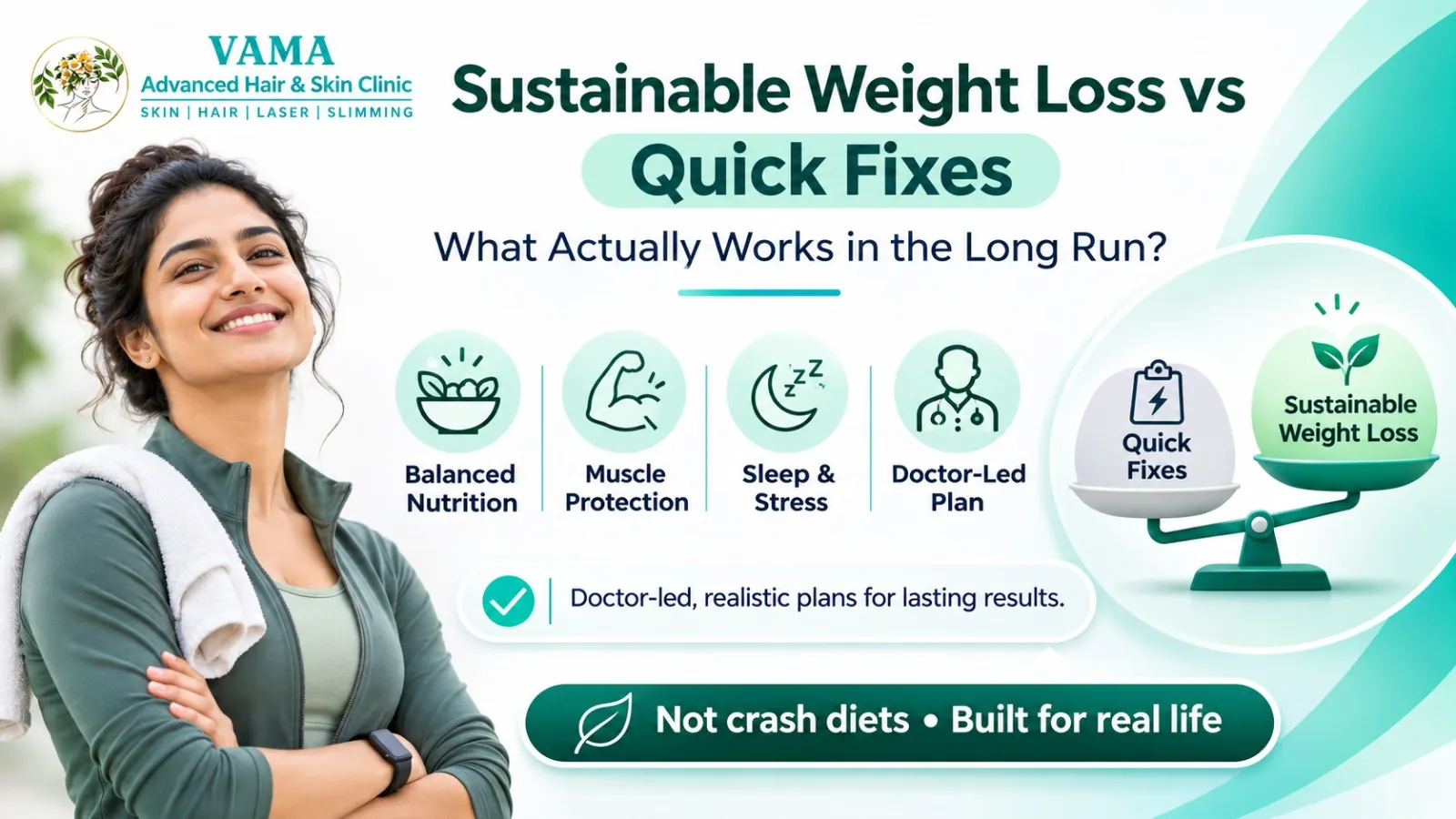
Losing five kilos in two weeks sounds exciting, until the diet ends, the cravings return and the scale starts creeping back up.
Many people who walk into Vama Clinics have been through this cycle more than once. They are not lacking willpower. They have usually been following plans built for speed, not for staying power.
This guide explains why quick fixes often fail, what makes weight loss last and how a medically supervised plan differs from a crash diet. If you are thinking about a Weight Loss Clinic in Kanpur, it should help you ask better questions before you start.
Quick Fixes vs Sustainable Weight Loss
The difference is not only speed. It is the goal behind the plan.
Quick fixes aim for a number on the scale. They rely on extreme calorie cuts, skipped meals, detox drinks, fasting or single-food diets. The early drop looks impressive, but it is often mostly water and some muscle, not just fat.
Sustainable weight loss aims for a result you can keep. It uses a moderate calorie deficit, enough protein, regular movement and habits that fit your real life. Progress is slower and steadier, and the plan includes what happens after you reach your goal.
Fast weight loss is not always harmful, especially when a doctor supervises it. The problem is rapid loss with no attention to nutrition, health or what comes next.
Why Do Quick Fixes So Often Fail?
Crash diets and extreme plans rarely deal with the reasons weight comes back. Three things commonly happen.
1. Hunger goes up.
When you eat far less than your body needs, hunger hormones rise and fullness signals weaken. Cravings feel stronger, and sticking to the plan gets harder every week.
2. Your body needs fewer calories.
As weight falls, your body burns less energy, especially if you lose muscle along with fat. The same food that once maintained your weight can now cause gain.
3. The plan is impossible to keep.
If you cannot eat this way for years, you will eventually go back to old habits. Weight then returns, sometimes with a little extra.
This is why many people regain weight after strict diets. It is a design flaw in the plan, not a personal failure.
What Makes Weight Loss Sustainable?
Long-term success usually rests on a few steady foundations.
Eat for Nutrition, Not Just Fewer Calories
A good plan includes enough protein, vegetables, fiber-rich foods, and sensible portions of carbohydrates and healthy fats. Cutting food groups completely is rarely necessary and often backfires. Indian meals can work well here: dal, curd, sabzi, roti in measured portions, eggs, paneer, chicken or fish, depending on your preference.
Protect Your Muscle
When you lose weight, you can lose muscle as well as fat. Strength training and enough protein help you keep muscle, which supports your metabolism, posture and strength. Walking and other cardio are valuable for heart health, but resistance exercise matters too.
Sleep and Stress Matter More Than You Think
Poor sleep and constant stress can raise appetite, increase cravings and make healthy choices harder. Improving sleep, even slightly, often makes a plan easier to follow.
Build Habits, Not Rules
Small changes you can repeat daily beat dramatic changes you drop after three weeks. Examples include a daily walk, a protein-rich breakfast, fewer sugary drinks and a regular dinner time.
Plan for Maintenance from Day One
Most people focus only on losing weight. A sustainable plan also covers how you will keep it off: regular check-ins, weight monitoring, ongoing activity and a clear approach for slips. Maintenance is where most plans quietly fail.
When Are Lifestyle Changes Alone Not Enough?
Some people eat well, move regularly and still struggle. There are real medical reasons for this:
- Hormonal conditions such as thyroid problems and PCOS
- Insulin resistance and prediabetes or diabetes
- Certain medicines that cause weight gain
- Genetics that affect appetite and fat storage
- Long-term stress and sleep problems
- Obesity-related changes in the body that make weight loss harder
If you have repeatedly lost and regained weight, or if excess weight is affecting your health, a medical assessment can find out what is going on. This is where a doctor-led approach helps more than another diet plan.
What Does Medically Supervised Weight Loss Involve?
A good medical programme looks at the whole picture, not only your weight. It typically includes:
- A detailed health history: past weight changes, medical conditions, medicines, sleep, stress and eating patterns
- Basic checks and tests: such as blood sugar, thyroid, cholesterol and other tests as your doctor sees fit
- A personalized nutrition plan: built around your food preferences, culture and routine
- Activity guidance: suited to your fitness level and any joint or health limits
- Regular follow-ups: to track progress, adjust the plan and catch problems early
- Treatment options when appropriate: some people may be considered for prescription medicines, and this should only happen after a proper medical evaluation
A programme like this treats weight as a health issue, not just an appearance issue. You can read more about our approach to medical weight loss and obesity treatment.
A Word on Prescription Weight-Loss Medicines
You may have heard about newer prescription medicines for weight management. These are real medical treatments, but they are not magic and they are not for everyone.
- They are meant for people who meet specific medical criteria, and your doctor decides this after assessment.
- They work best alongside changes to food and activity, not instead of them.
- They can cause side effects, and some people should not take them.
- Weight can return after stopping, so any plan should include a long-term strategy.
- They must never be bought or used without a prescription and medical monitoring.
If a clinic offers a medicine as an instant solution without examining you, be careful.
What Happens After Weight Loss?
Reaching your goal weight is a big milestone, but your body may look different from what you imagined. After significant weight loss, some people notice:
- Less muscle definition
- Looser skin
- Changes in body shape
- Stubborn fat in certain areas
These effects depend on age, genetics, how much weight you lost and how fast. Not everyone needs further treatment. Strength training often improves tone, and skin may tighten somewhat over time. If you still want to address specific concerns, speak to your doctor about options once your weight is stable.
Warning Signs of an Unsafe Weight-Loss Plan
Be careful if a programme:
- Promises a fixed amount of weight loss in a very short time
- Tells you to cut out whole food groups or eat extremely little
- Sells you supplements, powders or "detox" products as the main solution
- Does not ask about your health history or medicines
- Offers prescription medicines without a medical assessment
- Has no follow-up or maintenance plan
- Pushes large prepaid packages before examining you
- Uses only dramatic before-and-after photos as proof
A good clinic will focus on safety, realistic expectations and your long-term health.
How to Choose a Weight Loss Doctor or Clinic in Kanpur?
When you look for a Weight Loss Doctor in Kanpur, qualifications and approach matter more than promises. Check for:
- Medical qualifications: a recognised degree and valid registration
- A proper assessment: health history, examination and tests where needed
- A personalised plan: not the same diet sheet given to everyone
- Honest expectations: a realistic rate of weight loss, not miracle claims
- Clear communication: your questions are answered in simple words
- Follow-up support: regular reviews and a maintenance plan
- Transparent pricing: costs explained upfront, with no hidden charges
You can also look for a Weight Loss Specialist in Kanpur with experience in conditions linked to weight, such as thyroid disorders, PCOS or diabetes, since these affect the plan.
What Does a Good Clinic Look Like?
Many people search for the Best Weight Loss Clinic in Kanpur and find long lists and star ratings. But "best" is personal. The right clinic for you is one that examines you carefully, explains your options honestly and builds a plan around your health and daily life. Visit more than one clinic if you can, compare consultations and read detailed independent reviews, not just ratings.
A trustworthy Weight Loss Treatment in Kanpur plan should feel clear, safe and manageable, not rushed or extreme. At Vama Clinics, our approach is to assess first, plan around your health and goals and support you at every stage.
Questions to Ask at Your First Consultation
- What factors do you think are affecting my weight?
- Do I need any blood tests or health checks?
- What kind of weight loss is realistic for me, and over what time?
- What will my nutrition plan look like, and can it suit my food habits?
- How will you help me keep my muscle?
- Are any medicines appropriate for me, and what are the risks?
- How often will I have follow-ups?
- What is the full cost, and what does it include?
- What is the plan for keeping the weight off afterwards?
A Simple, Sustainable Starting Plan
Before you see a doctor, you can begin with small steps:
- Walk daily. Start with 20 to 30 minutes and build up.
- Add protein to every meal. Dal, eggs, curd, paneer, chicken, fish or sprouts.
- Fill half your plate with vegetables.
- Cut back on sugary drinks and packaged snacks.
- Eat at regular times and avoid skipping meals.
- Sleep seven to eight hours where possible.
- Weigh yourself or measure your waist weekly, not daily.
These steps will not replace medical advice if you have health conditions, but they build the right foundation.
Frequently Asked Questions
Slow, steady loss is often easier to keep, but speed alone does not decide success. Nutrition, muscle protection, medical safety and a maintenance plan matter more.
Final Thoughts
Quick fixes change the number on the scale for a while. Sustainable weight loss changes your habits, protects your health and gives you a plan for keeping the results. The most suitable approach is not the fastest one. It is the one that is safe, realistic and manageable for your life.
If you would like a doctor-led assessment and a plan built around you, visit Vama Clinics for personalised weight management. Book a consultation
Have a question about this?
Talk to one of our specialists directly — no obligation.
Book a Consultation