
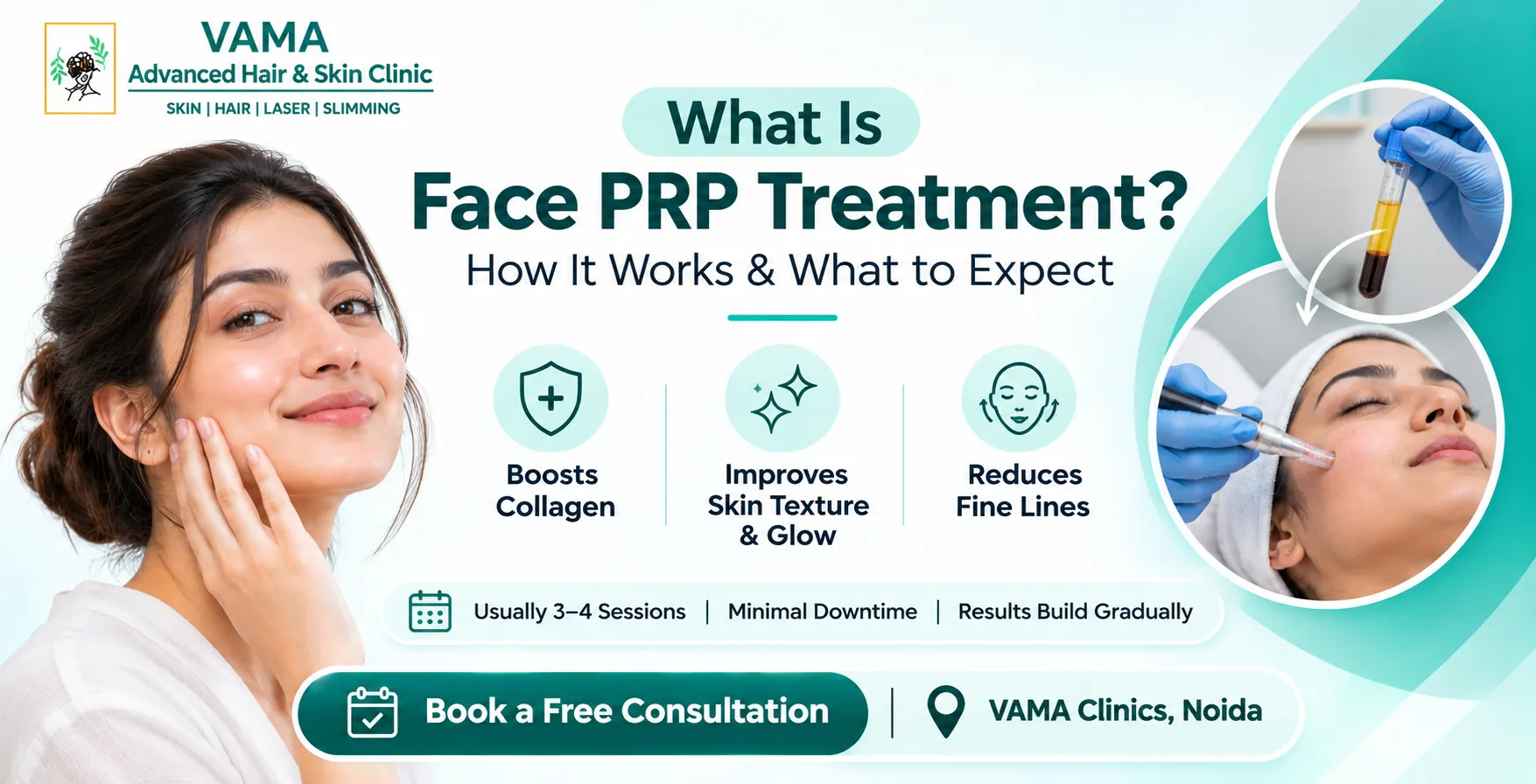
Skin changes slowly, then all at once. Fine lines appear around the eyes, the complexion loses its glow, texture turns uneven and old acne marks refuse to fade. Creams help up to a point, but many people want something that works on the skin itself without surgery or long recovery.
Face PRP is one such option. It uses a part of your own blood to encourage the skin to repair and renew itself. If you are considering Face PRP treatment in Noida or elsewhere in the region, this guide explains what the treatment is, how it works, what a session involves, how many sessions most people need and what to check before you book.
By the end, you will know what to expect and which questions to ask at your first consultation.
What Is Face PRP Treatment?
PRP stands for platelet-rich plasma. Face PRP is a skin rejuvenation treatment that uses a small sample of your own blood. The blood is processed to separate the platelet-rich plasma, which is then applied to the face by micro-injection or together with micro-needling.
Because the plasma comes from your own body, the treatment is described as autologous. The material is yours, not a synthetic filler or a chemical, which is why many people see it as a more natural route to better skin.
Face PRP is aimed at improving skin quality rather than changing facial structure. It works on tone, texture and early signs of ageing, instead of reshaping the face or adding volume.
How Does Face PRP Work?
Blood contains red cells, white cells, plasma and platelets. Platelets are best known for helping blood clot, but they also carry growth factors, proteins that signal the body to repair tissue.
When a concentrated dose of platelets is placed in the skin, it triggers a natural healing response. Over the following weeks, the skin is encouraged to:
- Produce new collagen, the protein that keeps skin firm
- Repair surface damage that dulls the complexion
- Improve texture and tone gradually
- Renew itself more actively
When micro-needling is used, it creates tiny channels that help the plasma reach the skin and adds its own repair signal. Because the effect depends on collagen forming over time, results build gradually instead of appearing overnight.
A good clinic will explain which method suits your skin. For example, a team offering Face PRP treatment in Indirapuram will assess your skin first, then recommend micro-injection, micro-needling or a combination.
What Happens During a Face PRP Session?
The process is straightforward and follows five steps.
- 1Consultation and diagnosis: a dermatologist examines your skin, asks about your medical history and any medicines, and confirms whether PRP suits you.
- 2Blood sample: a small amount of blood is drawn, much like a routine blood test.
- 3Processing: the blood is processed to separate the platelet-rich plasma from the other components.
- 4Application: the PRP is applied to the treatment area by micro-injection, with micro-needling, or both. Your clinic will explain how comfort is managed.
- 5Aftercare and follow-up: you receive clear instructions for the days ahead, and collagen building continues over the next several weeks.
A session usually lasts 45 to 60 minutes, so it fits easily into a normal day.
Benefits of Face PRP and the Concerns It May Address
Face PRP is chosen mainly to improve overall skin quality. It may help with:
- Dull or tired-looking skin
- Uneven texture and complexion
- Fine lines and early signs of ageing
- Mild acne scars
- Reduced firmness
- Loss of radiance
Other advantages include the use of your own blood, minimal side effects, no surgery and very little downtime.
Results vary from person to person, and PRP has limits. It is not a replacement for surgery or for treatments designed for deep wrinkles or deep scarring. Realistic expectations matter as much as the procedure itself.
Who it suits
Face PRP is generally for adults who want better skin quality or early anti-ageing benefits without surgery. People with active skin conditions, bleeding-related concerns or who take certain medicines should speak to a doctor first. If you are searching for Face PRP treatment in Ghaziabad, a consultation will confirm whether you are a good candidate before any plan is made.
Sessions, Downtime and When Results Show
The key numbers are below. They are typical figures, and your doctor will confirm the plan for your skin.
| Detail | What to expect |
|---|---|
| Number of sessions | Typically 3 to 4 |
| Length of each session | 45 to 60 minutes |
| Downtime | About one day of mild redness |
| Results | Build gradually over several weeks |
The number of sessions and the speed of recovery vary by individual. Your skin type, age, concerns and how well you follow aftercare all play a part.
Because collagen takes time to form, improvement is gradual. Expect changes to build over the weeks that follow your sessions rather than appear the next morning, with timing differing from person to person.
Aftercare Tips for Better Results
Always follow your own doctor's instructions, but these habits help most people:
- Keep the skin clean and avoid touching it with unwashed hands
- Use sunscreen every day and avoid direct sun
- Skip harsh scrubs and strong active products until your doctor says they are safe
- Avoid makeup for as long as your doctor advises
- Drink enough water and use a gentle moisturizer
- Do not pick at any flaking skin
- Complete your full course of sessions
Sun protection matters most. Freshly treated skin is sensitive, and sun damage can undo the progress you are working toward.
Follow-up also counts. Anyone looking for Face PRP treatment in Kanpur should ask how progress will be reviewed, because a good clinic tracks your skin between sessions instead of assuming it is improving.
Is Face PRP Safe? How to Choose the Right Clinic
Because PRP comes from your own blood, the risk of a reaction to the material itself is low. Side effects are usually minor: redness, mild swelling, tenderness or small bruises that settle quickly. As with any treatment that involves needles, infection is possible but uncommon when hygiene standards are high.
Speak to a doctor before treatment if you have an active skin condition, a bleeding-related concern, or take medicines that may affect bleeding. Your doctor will tell you whether to go ahead, wait or choose another option.
When comparing clinics, look for:
- Certified dermatologists who will explain the procedure
- A real consultation before any plan is suggested
- Individualized treatment plans instead of one package for everyone
- Transparent pricing with no hidden costs
- Clear aftercare and follow-up
- Honest advice about results, with no guarantees
If you are comparing options for Face PRP treatment in Agra, ask to speak with the doctor who will treat you, and ask for the number of sessions and the full cost up front.
Frequently Asked Questions
Most people describe mild discomfort from the blood draw and the application. How much you feel depends on your own sensitivity and the method used, so ask your clinic how comfort is managed.
The Bottom Line
Face PRP is a gentle, non-surgical way to support skin that looks dull, tired or uneven. It works with your own body, builds results gradually and needs very little downtime. It is not a miracle, but with the right diagnosis and realistic expectations, it can noticeably improve how your skin looks and feels.
If you are ready to begin, start with a conversation. VAMA Clinics offers a free first consultation with individualized plans and transparent pricing. Whether you are looking for Face PRP treatment in Lucknow or in another city we serve, book a consultation and bring the questions from this guide.
Have a question about this?
Talk to one of our specialists directly — no obligation.
Book a Consultation