
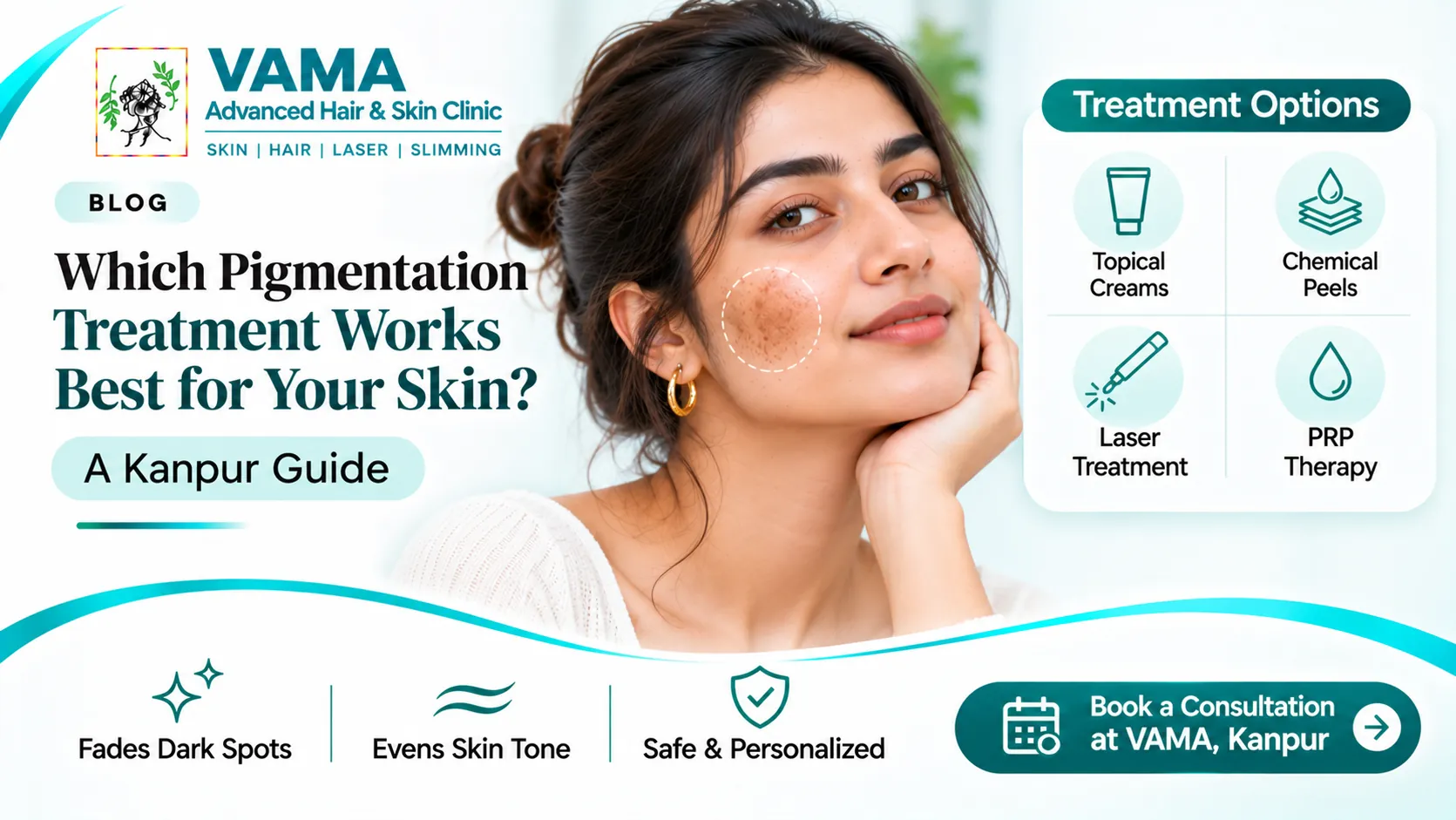
Dark patches on the cheeks, uneven skin tone, spots that never fade after a pimple heals: pigmentation is one of the most common skin concerns in India. Kanpur's strong sun, heat, dust and pollution make it even harder to manage. Many people try one cream after another, then wonder why nothing works.
The reason is simple. Pigmentation is not one condition. It has several types and causes, and a treatment that works for one can do nothing, or even make things worse, for another. This guide explains the common types, compares the main options and shows how to choose. If you are searching for pigmentation treatment in Kanpur, understanding this first will help you get far more from your consultation.
What Causes Pigmentation?
Your skin gets its colour from melanin, made by cells called melanocytes. Pigmentation appears when these cells produce too much melanin in certain areas. Common triggers include:
- Sun exposure: UV rays are the biggest cause, and they darken existing spots.
- Hormonal changes: pregnancy, birth control pills and conditions like PCOS or thyroid problems can trigger melasma.
- Inflammation or injury: acne, rashes, burns and insect bites can leave dark marks behind.
- Skin products and procedures: harsh scrubs, wrong creams or poorly done treatments can irritate skin and worsen marks.
- Genetics and ageing: some people are simply more prone to pigmentation.
- Medicines and health conditions: certain drugs and nutritional deficiencies can affect skin colour.
People with medium to darker skin tones have more active melanocytes, so they are more likely to develop stubborn pigmentation. They also need extra care during treatment.
Common Types of Pigmentation
Melasma
Brown or grey-brown patches, usually on the cheeks, forehead, upper lip and nose. It is linked to hormones and sun, and it often returns if sun protection is neglected.
Post-Inflammatory Hyperpigmentation (PIH)
Dark marks left after acne, eczema or injury. They often fade with time, but can last months without treatment.
Sun Spots (Solar Lentigines)
Flat brown spots on the face, hands and arms, caused by years of sun exposure.
Freckles
Small, light brown spots that darken in the sun and are usually harmless.
Tanning
An even darkening of sun-exposed skin that usually improves with sun protection and skin care.
Telling these apart is the first step, which is why a proper skin examination matters before any treatment begins.
Pigmentation Treatment Options Compared
1. Prescription Creams and Topical Treatments
Doctors may prescribe creams containing ingredients such as azelaic acid, vitamin C, retinoids, kojic acid, niacinamide or tyrosinase inhibitors. These slow melanin production and help skin renew itself.
Best for: mild pigmentation, early melasma, post-acne marks, and as a base for other treatments.
Keep in mind: results take weeks to months. Some ingredients can irritate the skin or increase sun sensitivity, so use them only as advised. Self-medicating with strong steroid or bleaching creams can cause serious skin damage.
2. Chemical Peels
Peels use controlled acids, such as glycolic, salicylic, lactic or mandelic acid, to exfoliate the top skin layers and encourage fresh, evenly coloured skin.
Best for: acne marks, tanning, dullness and mild to moderate pigmentation.
Keep in mind: several sessions are usually needed. Peel strength must be matched to your skin type, as a wrong peel can cause burns or darker patches.
3. Laser Treatments
Lasers deliver targeted light energy that breaks down excess pigment, which the body then clears naturally. Options such as Q-switched and picosecond lasers are commonly used for pigmentation.
Best for: sun spots, freckles, stubborn dark patches and some types of birthmarks.
Keep in mind: lasers must be used carefully in Indian skin. Wrong settings can lead to rebound pigmentation. Melasma in particular needs a cautious approach, since heat can trigger it to return. Strict sun protection before and after is essential.
4. Microneedling and PRP for Skin
Microneedling creates tiny controlled channels in the skin, which stimulates renewal and helps active ingredients penetrate. Platelet-rich plasma (PRP), taken from your own blood, may be used along with it to support skin repair.
Best for: acne scars with pigmentation, uneven texture and dull skin.
Keep in mind: results are gradual, and several sessions are normally recommended. It is usually part of a wider plan, not a standalone fix for deep pigmentation.
5. HydraFacial and Medical Facials
These cleanse, exfoliate and hydrate the skin using advanced devices and serums. They improve glow and overall tone with little or no downtime.
Best for: dullness, mild uneven tone and skin maintenance between stronger treatments.
Keep in mind: they support, but do not replace, targeted pigmentation treatment.
Which Treatment Is Right for Your Skin?
| Your concern | Treatments often considered |
|---|---|
| Melasma | Prescription creams, gentle peels, carefully chosen lasers, strict sun care |
| Acne marks (PIH) | Creams, peels, microneedling |
| Sun spots and freckles | Lasers, peels, topical treatments |
| Tanning and dullness | Peels, HydraFacial, sunscreen and skin care |
| Mixed pigmentation | A combined plan after skin assessment |
This table is a general guide, not a prescription. The best plan depends on your skin type, the depth of the pigment, your medical history and your lifestyle. This is why the best pigmentation treatment in Kanpur for one person may not be right for another.
Why a Combination Plan Often Works Better
Because pigmentation has several layers and causes, a single treatment rarely solves everything. A common approach might combine:
- 1A sun protection routine to stop new darkening
- 2Prescription or medical-grade creams to control melanin production
- 3Peels or lasers to clear existing pigment
- 4Supportive treatments such as hydration and barrier repair
Your doctor will decide the order and the number of sessions. Patience matters here, as pigmentation usually improves in stages over weeks to months, not days.
Sun Protection: The Part You Cannot Skip
No treatment holds if the skin is exposed to the sun without care. Even brief exposure can bring pigmentation back, especially melasma. Follow these habits:
- Apply a broad-spectrum sunscreen with SPF 30 or higher every morning, and reapply every two to three hours when outdoors
- Use sunscreen even on cloudy days and indoors near windows
- Wear a hat, sunglasses or a scarf during peak sun hours
- Avoid picking at pimples and scabs, which can leave dark marks
- Avoid harsh scrubs and unprescribed lightening creams
Who Should Be Careful Before Treatment?
Speak to your doctor first if you:
- Are pregnant or breastfeeding
- Have active acne, infections, eczema or open wounds in the area
- Are prone to keloids or abnormal scarring
- Have a recent tan or sunburn
- Take medicines that increase sun sensitivity
- Have used strong or unknown creams on your face
Possible side effects vary by treatment and can include redness, peeling, dryness, temporary darkening or irritation. A good doctor will explain these in advance and tell you how to manage them.
How to Choose the Right Clinic?
Pigmentation treatment involves medical decisions, so the clinic you pick matters. When searching for a pigmentation treatment clinic in Kanpur, look for:
- 1Qualified doctors: peels, lasers and prescriptions should be planned by a qualified dermatologist or trained aesthetic physician.
- 2Proper skin diagnosis: your skin type, history and triggers should be assessed before a treatment is suggested.
- 3Honest expectations: be wary of promises like "complete removal in one session" or "100% guaranteed".
- 4Suitable technology for Indian skin: ask how settings are chosen for your skin tone.
- 5Hygiene and genuine products: look for a clean setup, single-use items and clear aftercare.
- 6Clear pricing: ask for the number of sessions, total cost and follow-up plan.
- 7Real results: ask to see genuine before-and-after photos of similar cases.
What to Expect During Your Consultation?
A good consultation usually includes:
- A discussion of when the pigmentation started and what may have triggered it
- Questions about your skincare products, medicines, hormones and sun exposure
- A close skin examination, sometimes with a magnified view
- An explanation of your options, the number of sessions and the likely timeline
- Clear aftercare instructions
Bring a list of the products you currently use, and tell your doctor about any past treatments, even if they did not work.
Frequently Asked Questions
Many types can be improved significantly, but complete removal is not guaranteed for everyone. Conditions like melasma can come back, especially with sun exposure or hormonal changes.
Final Thoughts
There is no single winner among pigmentation treatments. Creams, peels, lasers and microneedling each have a place, and the best result comes from matching the treatment to your type of pigmentation, your skin tone and your lifestyle. Daily sun protection and patience are as important as any procedure.
If you are looking for safe, doctor-led skin pigmentation treatment in Kanpur or a personalized pigmentation removal treatment in Kanpur, start with a proper skin assessment. An honest diagnosis saves you time, money and the frustration of trying products that do not suit your skin.
Book a consultation with VAMA to understand your pigmentation and get a treatment plan designed for your skin.
Have a question about this?
Talk to one of our specialists directly — no obligation.
Book a Consultation