
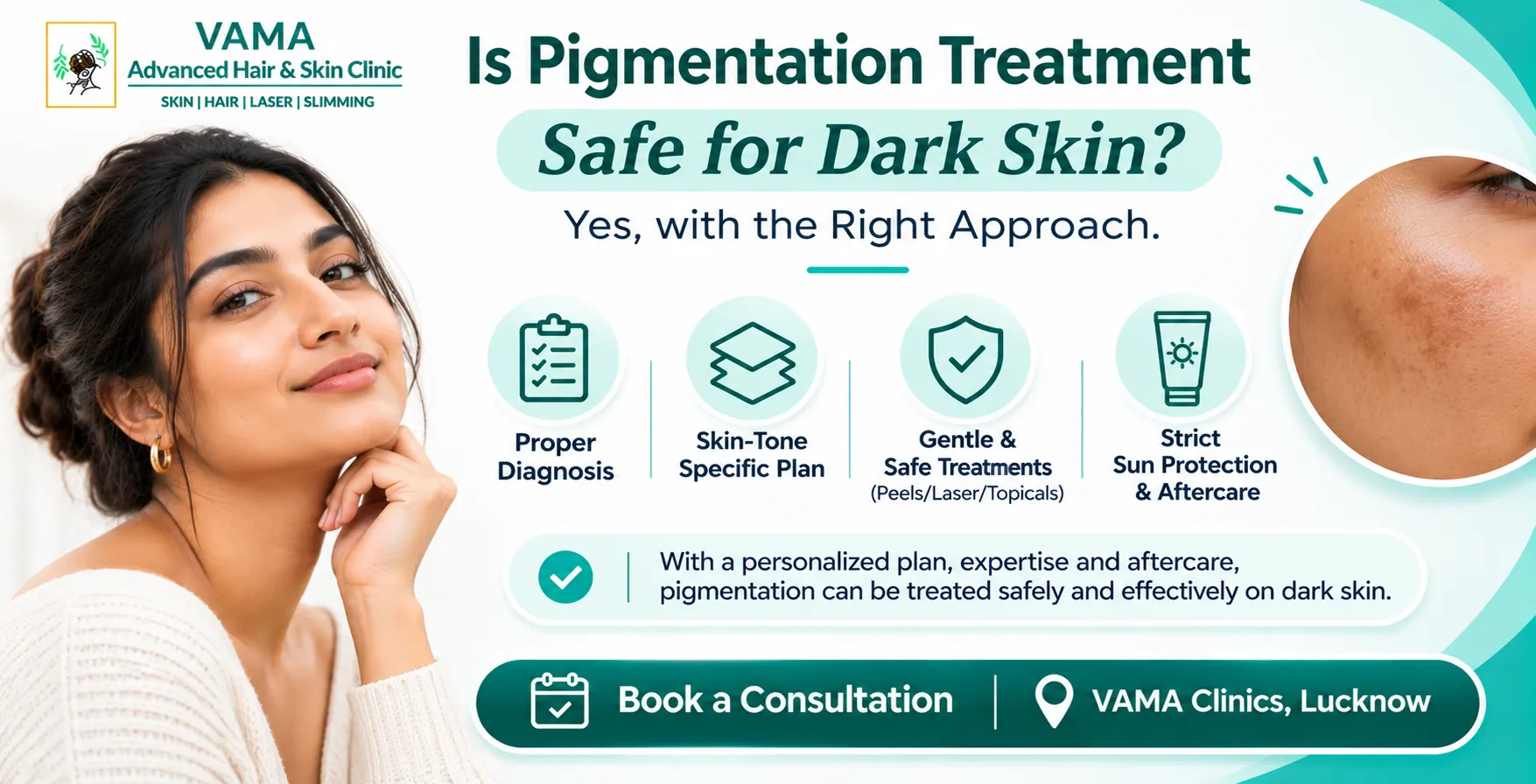
If you have a deeper skin tone and you've been told to "be careful" with lasers, peels or strong creams, you're not imagining things. Darker skin does behave differently, and that matters when you're treating dark patches. But the answer to the question in the title isn't a simple no. Pigmentation treatment can be used safely on dark skin when the right approach is chosen, the settings are adjusted properly and the plan is guided by someone who understands your skin.
If you're researching pigmentation treatment in Lucknow, this guide explains why dark skin needs extra care, which risks to know about, which options are commonly used and how to protect yourself before you begin.
Short Answer: Yes, With the Right Approach
Pigmentation treatment is not automatically unsafe for dark skin. What makes the difference is who plans it, how it's chosen and how carefully it's carried out. A gentle, well-matched plan can be safe and effective. An aggressive, one-size-fits-all approach can leave you with darker marks than you started with.
That's why anyone comparing the best pigmentation treatment in Lucknow should look first at the quality of assessment and planning, and only then at the machines or the price list.
Why Dark Skin Needs Extra Care
Skin colour comes from melanin, a pigment made by cells called melanocytes. People with deeper skin tones have more active melanocytes, which offers excellent natural protection from the sun. But the same cells also react strongly to irritation, heat and inflammation.
This means that when darker skin is irritated, burned or injured, it can respond by producing extra pigment, leaving a dark mark that may take months to fade. This is called post-inflammatory hyperpigmentation.
An unsuitable treatment can also, in some cases, cause the opposite problem, with lighter patches. These risks are the reason pigmentation treatment for dark skin should be approached with caution, not avoided altogether.
The Main Risks to Know About
Being informed helps you ask the right questions.
- Post-inflammatory hyperpigmentation: new dark marks caused by irritation or heat.
- Lightening or uneven patches: can occur when pigment cells are damaged.
- Burns or blistering: more likely when strong treatments or the wrong device settings are used.
- Worsening of melasma: heat and strong treatments can sometimes make melasma darker.
- Irritation and sensitivity: harsh ingredients can inflame the skin and trigger more pigment.
None of these are inevitable. They are mostly linked to the wrong treatment, the wrong strength, poor technique or poor aftercare, which is why choosing carefully matters so much.
Common Types of Pigmentation in Darker Skin
Different types of pigmentation behave differently, so identifying yours is the first step:
- Melasma: brownish patches, often on the cheeks, forehead and upper lip, linked to hormones and sun exposure.
- Post-acne marks: dark spots left after pimples heal.
- Post-inflammatory pigmentation: darkening after a rash, injury or irritation.
- Sun-induced pigmentation: freckles and sun spots from repeated exposure.
- Age-related dark spots: flat brown spots that appear gradually.
- Uneven skin tone: a patchy or dull look without one obvious cause.
Because different types can look alike, a proper assessment is important before any treatment begins.
What Causes Pigmentation?
Pigmentation can develop due to sun exposure, hormonal changes, acne and skin inflammation, injuries, certain medications and irritating skincare products. Sun exposure is one of the biggest triggers, since ultraviolet and visible light can stimulate pigment production and darken existing patches.
Identifying the cause matters, because treating the pigment without removing the trigger often means it returns.
Treatment Options and How They Apply to Dark Skin
There is no single treatment that works for everybody. A plan may combine several approaches.
Sun protection
This is the foundation of every plan, whatever your skin tone. Dark skin can still pigment and burn, and visible light can worsen certain types of pigmentation. A broad-spectrum sunscreen with SPF 30 or higher, shade, hats and sunglasses help protect your results.
Professional skincare
A gentle, personalized routine helps support an even tone over time. For darker skin, avoiding irritation is key, so products need to be chosen carefully and introduced one at a time.
Topical medication
Where appropriate, a doctor may prescribe creams or serums to reduce pigment production or support skin renewal. These need medical supervision, as incorrect use can irritate the skin and cause rebound darkening.
Chemical peels
Peels use controlled acids to exfoliate the skin. For dark skin, the type and strength should be chosen conservatively, and not every peel is suitable. An unsuitable or overly strong peel is one of the most common causes of new pigmentation.
Laser and light-based procedures
Selected laser and light-based treatments may be used for certain types of pigmentation. For darker skin tones, the choice of device, settings and technique is critical, because heat is one of the main triggers for more pigment. These should only be performed by experienced professionals, and are not suitable for every type of pigmentation.
Why Treatment Needs to Be Gentle and Gradual
With darker skin, slow and steady usually beats fast and aggressive. A careful plan often starts conservatively, observes how your skin responds and adjusts from there. This may mean results appear gradually, but it lowers the risk of irritation and rebound pigmentation.
If anyone promises dramatic results in a single session, treat that as a warning sign.
If you are looking for expert assessment of your concern, skin pigmentation treatment in Lucknow at VAMA Clinics begins with a consultation, where your pigmentation pattern, skin type, medical history and possible triggers are assessed before any treatment is recommended.
What a Safe Assessment Should Include
Before starting, expect a proper discussion covering:
- When your pigmentation began and what may have triggered it
- Your skin type and how it reacts to sun and irritation
- Your history with acne, rashes and previous treatments
- Any medication, hormonal conditions or pregnancy plans
- Products and home remedies you currently use
- Your goals and realistic timelines
Your doctor may also suggest a small test area for some treatments, to see how your skin reacts before treating a larger area.
Questions to Ask Before You Start
Bring these to your consultation:
- What type of pigmentation do I have, and what is causing it?
- Is this treatment suitable for my skin tone?
- What risks apply to me specifically?
- Will you start gently, and how will you adjust the plan?
- How many sessions might I need, and how long will it take?
- What aftercare will I need to follow?
- What happens if my skin reacts badly?
A confident, caring professional will welcome these questions.
Warning Signs of an Unsafe Approach
Be cautious if a clinic:
- Recommends a procedure without examining your skin
- Offers the same treatment to everyone
- Promises instant, guaranteed or permanent results
- Doesn't ask about your skin type, history or medication
- Dismisses your concerns about risks for dark skin
- Pressures you to book or pay immediately
- Doesn't explain aftercare
Aftercare: Protecting Your Skin After Treatment
What you do afterwards matters as much as the treatment itself:
- Apply broad-spectrum sunscreen every morning and reapply outdoors.
- Avoid direct sun and heat, such as saunas and very hot showers, as advised.
- Don't pick, peel or scratch the treated skin.
- Use only the products your doctor recommends.
- Keep skin moisturised and avoid harsh scrubs.
- Attend every follow-up visit.
If you notice unusual redness, burning, blistering or darkening, contact your clinic promptly.
Home Care: What to Avoid
Many people try remedies before visiting a clinic, and some of them cause harm:
- Lemon juice, undiluted acids and similar kitchen remedies on the face
- Strong bleaching creams used without medical advice
- Harsh scrubs and over-exfoliation
- Using several active products together
- Skipping sunscreen because of a darker skin tone
These can irritate dark skin and trigger more pigmentation, and a doctor may need to treat the damage before pigmentation treatment can begin.
How Long Will It Take?
Timelines vary with the type, depth and cause of pigmentation. Improvement is usually gradual, with a plan often involving several steps and follow-up visits. Conditions like melasma tend to need ongoing maintenance, because sun and hormones continue to act as triggers. A realistic specialist will explain this at the start, rather than promising a quick fix.
Frequently Asked Questions
It can be used in selected cases, but the device, settings and technique must be chosen carefully by an experienced professional, since heat can trigger more pigment in darker skin.
Choosing Care You Can Trust
Safe pigmentation treatment for dark skin comes down to three things: a proper diagnosis, a gentle plan suited to your skin tone and consistent sun protection and aftercare. The technology matters less than the judgement behind it.
When you shortlist a pigmentation treatment clinic in Lucknow, book a consultation first and use it to ask questions about your skin type, risks, timeline and aftercare. A clinic that listens, examines carefully and explains clearly is far more likely to give you a result you're happy with.
At VAMA Clinics, treatment is selected according to the type and depth of pigmentation, skin characteristics and individual requirements, and the approach is gradual and individualized rather than promising instant results.
When you're ready to act on a clear diagnosis, ask about pigmentation removal treatment in Lucknow options matched to your skin tone, so your plan is built around you and not around a standard package.
Have a question about this?
Talk to one of our specialists directly — no obligation.
Book a Consultation