
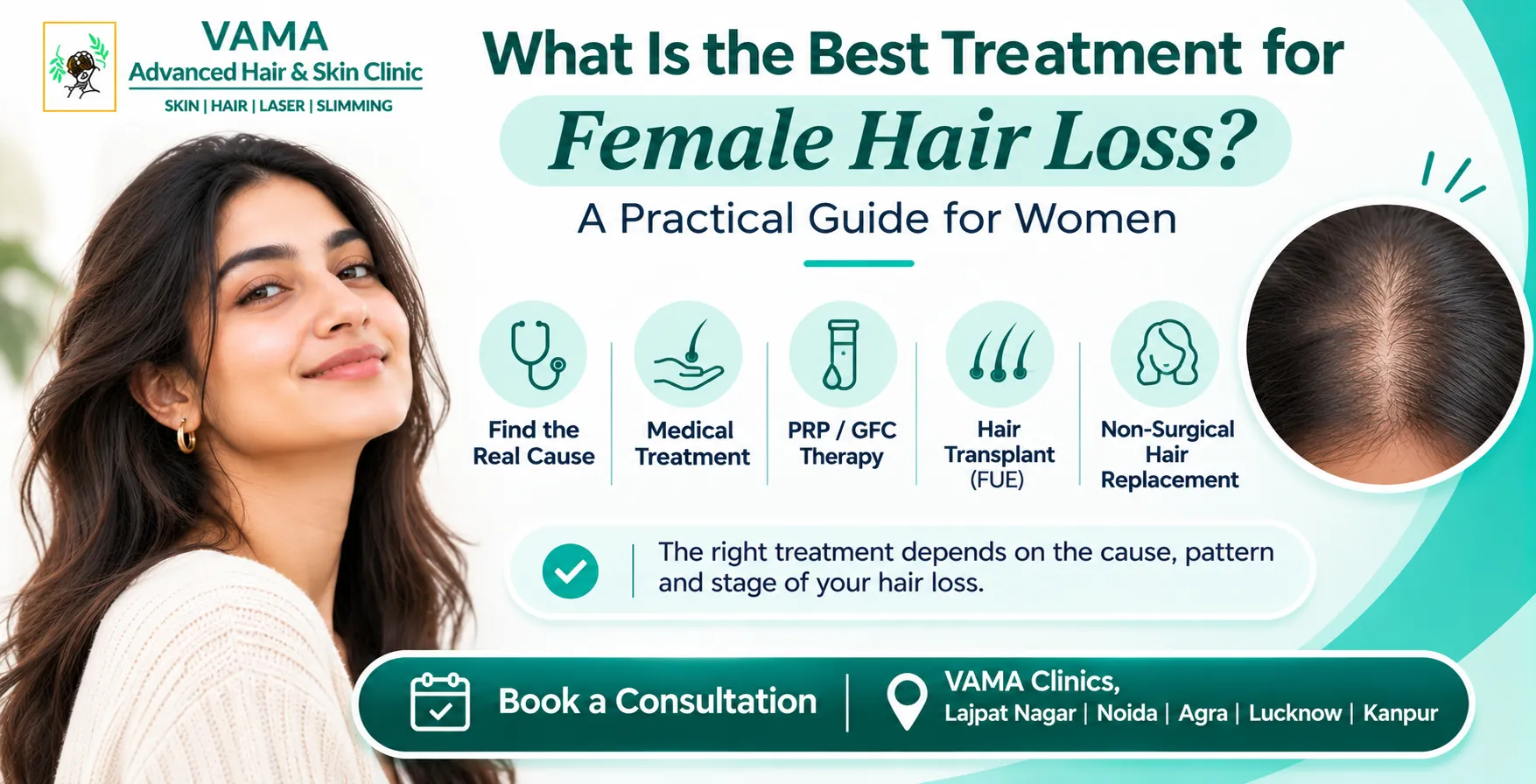
A few extra strands on the hairbrush are normal. But when your ponytail feels thinner, your parting looks wider or you can see more scalp under bright light, it is natural to feel worried. For many women, hair is closely tied to confidence and identity, so thinning can feel far more personal than a cosmetic problem.
The good news is that female hair loss is common, well understood and, in many cases, treatable. The less welcome news is that there is no single best treatment. The right answer depends on why your hair is thinning, how far it has progressed and what you want to achieve. This guide walks through the causes, the options and how to choose a clinic you can trust.
Why Female Hair Loss Looks Different from Male Hair Loss
Men often develop a receding hairline and a bald crown. Women usually do not. Instead, hair tends to thin gradually across the top of the scalp, the parting widens and the frontal hairline is typically preserved. Complete baldness is uncommon.
Doctors sometimes grade this pattern on a simple scale from mild thinning to more visible scalp, which helps in planning treatment. Whatever the grade, early attention gives you more options. If you are searching for a hair transplant clinic in Noida, it helps to first understand that for many women, a transplant is only one part of a larger plan, and not always the first step.
Common Causes of Hair Loss in Women
Because so many factors can be involved, diagnosis comes before treatment. The most common causes include:
- Female pattern hair loss: a genetic and hormonal condition causing gradual thinning over the crown and parting.
- Hormonal changes: pregnancy, childbirth, menopause, PCOS and thyroid disorders can all affect hair.
- Nutritional deficiencies: low iron, vitamin D, B12 or protein can weaken hair.
- Stress and illness: physical or emotional shock can push many hairs into the shedding phase at once, a pattern known as telogen effluvium.
- Crash dieting and rapid weight loss: a sudden drop in calories often shows up as shedding a few months later.
- Traction: tight ponytails, braids and extensions pulling on the roots over years.
- Scalp conditions: dandruff, fungal infections and inflammation.
- Autoimmune conditions: such as alopecia areata, which causes patchy loss.
- Medications and medical treatments: some drugs and therapies list hair thinning as a side effect.
Some of these causes are temporary and reversible. Others need long-term management. That is why a proper assessment matters more than any individual product or procedure.
Step One: Find the Cause
A good evaluation usually involves a detailed conversation about your history, diet, stress, periods, pregnancies and medications, followed by an examination of your scalp and hair density. Depending on what is found, your doctor may recommend blood tests to check thyroid function, iron levels, vitamins or hormones.
For women in the Delhi NCR region, a nearby hair transplant clinic in Indirapuram can be a convenient place to start with a consultation, where your hair loss pattern and possible triggers can be assessed before any treatment is suggested.
Treatment Options for Female Hair Loss
There is a range of options, and many women use more than one at a time.
1. Treating the underlying cause
If low iron, a thyroid problem or another medical issue is contributing, correcting it is the foundation of recovery. No product can fully compensate for an untreated cause.
2. Nutrition and lifestyle support
Balanced meals with enough protein, iron and vitamins, adequate sleep and stress management all support healthy hair growth. Avoid crash diets, which are a common and avoidable trigger.
3. Gentle hair and scalp care
Treat wet hair gently, limit heat styling, avoid very tight hairstyles and use products suited to your scalp. Persistent dandruff or irritation should be treated rather than ignored.
4. Medical treatment
Depending on your diagnosis, a doctor may recommend medicines or topical treatments to slow shedding and support regrowth. These need medical guidance, because the right choice depends on your health, your age and whether you are pregnant or planning a pregnancy.
5. PRP and growth factor therapies
In PRP, a small sample of your own blood is processed to concentrate platelets, which are then injected into the scalp to support the follicles. GFC is a related growth-factor approach. Both are commonly used for thinning hair, often alongside other measures, and results vary from person to person.
6. Hair transplant
A transplant moves healthy follicles from a donor area to thinner areas. It can suit some women, particularly those with stable thinning, good donor hair or loss caused by traction or scarring. It is not suitable for everyone, which is why assessment matters.
7. Non-surgical hair replacement
For women who are not suitable candidates for a transplant, or who prefer a non-surgical option, hair replacement systems can restore the look of fuller hair. They need regular maintenance, so discuss how they fit your lifestyle.
Is a Hair Transplant Right for You?
A transplant is usually considered when:
- The cause of hair loss has been identified and managed
- The thinning pattern is stable
- There is enough healthy donor hair
- Your scalp is healthy
- Your expectations are realistic
Women with diffuse thinning across the entire scalp, including the donor area, may not be good candidates. An honest doctor will tell you so, and suggest other routes.
If you live in or near Agra, a hair transplant clinic in Agra can assess whether your pattern of loss suits transplantation or whether non-surgical treatment should come first.
What to Expect from a Hair Transplant
In follicular unit extraction (FUE), individual follicular units are taken one by one from the donor area and placed into thinning areas. Recovery varies, but many people return to light activity within a few days.
The timeline of results often surprises people:
First weeks
Small scabs form and fall away.
Weeks 2–4
Transplanted hairs often shed, which is a normal phase.
Months 3–4
New growth begins.
Months 6–12
Hair thickens and the full result becomes visible.
Patience is part of the process. Be cautious of anyone promising instant or guaranteed results.
Choosing the Right Clinic
Women's hair loss is different from men's, so it is worth choosing a team that understands it. Look for:
- A consultation that starts with questions and examination, not a sales pitch
- Willingness to look at causes, not only to offer a procedure
- Honest advice about whether you need surgery at all
- A clear explanation of graft estimates and donor protection
- Transparent pricing
- Proper aftercare and follow-up
For patients in Uttar Pradesh, a hair transplant clinic in Lucknow can be a good place to begin, and the same standard of questions applies wherever you go.
Red Flags to Watch For
- A graft count quoted without examining your scalp
- Pressure to book or pay immediately
- Promises of guaranteed results
- Advice that the same treatment suits everyone
- No discussion of why your hair is falling
Questions to Ask at Your Consultation
- What do you think is causing my hair loss?
- Do I need any tests before starting treatment?
- Is surgery necessary, or should I try something else first?
- How many grafts do I realistically need, and how did you estimate that?
- How will you protect my donor area?
- Who will perform the procedure?
- What results and timelines are realistic?
If you are comparing options in the region, a hair transplant clinic in Kanpur should be willing to answer every one of these questions clearly.
Looking After Your Hair Alongside Treatment
Whatever treatment you choose, daily habits matter:
- Eat balanced meals with enough protein, iron and vitamins.
- Avoid crash diets and extreme calorie restriction.
- Manage stress with sleep, movement and downtime.
- Be gentle with wet hair and avoid tight hairstyles.
- Limit harsh chemical treatments and heavy heat.
- Follow your doctor's plan and attend follow-ups.
Frequently Asked Questions
It depends on the cause. Temporary causes such as nutritional deficiency or stress-related shedding often improve once addressed, while genetic thinning usually needs ongoing management.
Final Thoughts
The best treatment for female hair loss is the one matched to its cause. For some women, that means correcting a deficiency and giving the hair time to recover. For others, it means a combination of medical treatment, PRP or GFC and, in selected cases, a transplant.
Whatever your situation, start with a proper diagnosis. If you are exploring options in Delhi, a hair transplant clinic in Lajpat Nagar can help you understand your pattern of hair loss and the choices open to you.
And if you are searching for a hair transplant clinic in Wave City, ask the clinic the questions listed above and check which VAMA clinic and consultation options are closest to you before you decide.
At VAMA Clinics, the approach is personalized: your hair-loss pattern, scalp condition and long-term goals shape the plan, not a standard package. Book a consultation, bring your questions and leave with a clear understanding of your options.
Have a question about this?
Talk to one of our specialists directly — no obligation.
Book a Consultation