
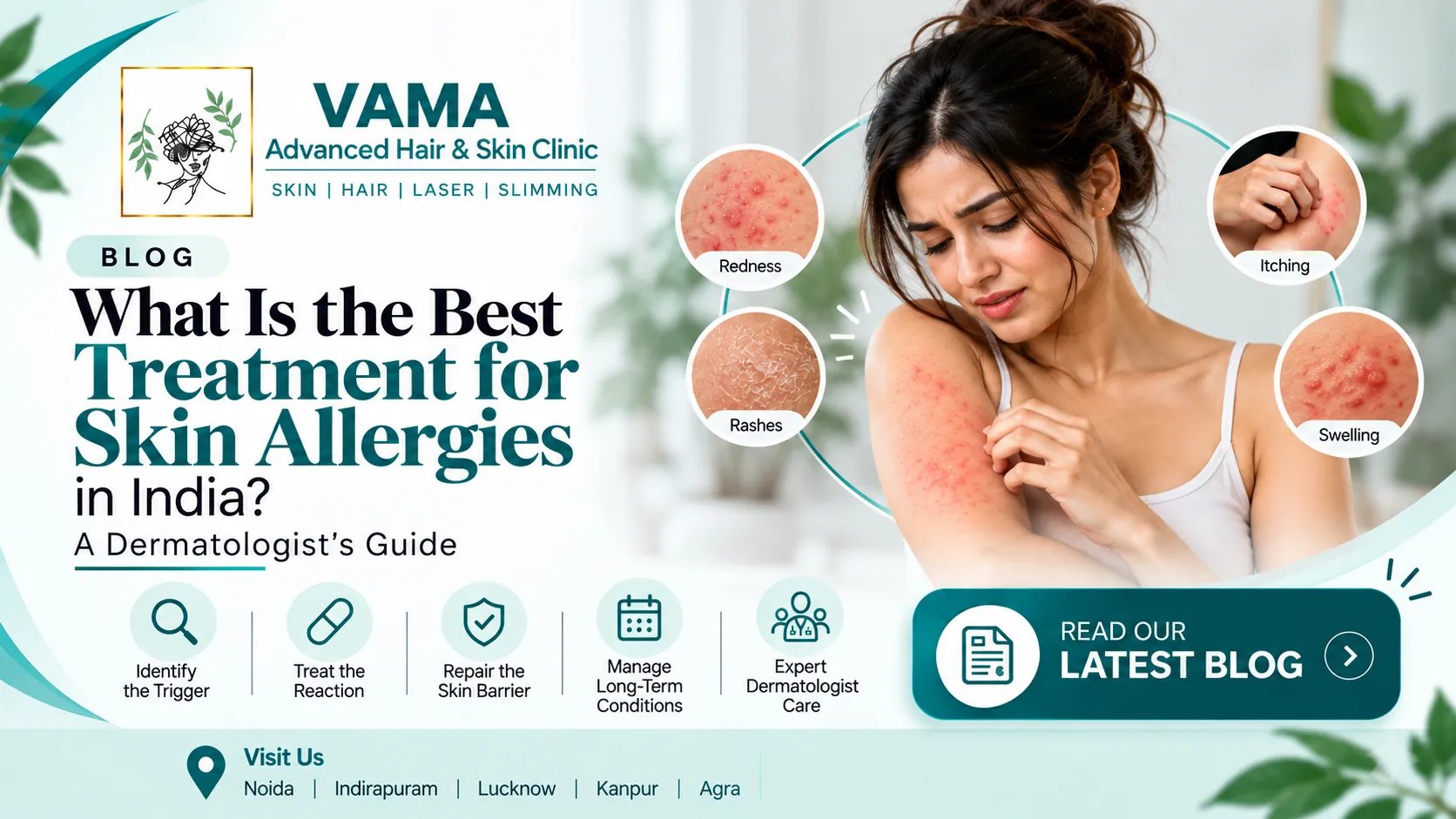
The best treatment for skin allergies in India is a personalized plan that finds the trigger first, then calms the reaction and repairs the skin barrier. No single cream or tablet works for everyone, because "skin allergy" covers many different conditions. If you are searching for an Allergy Clinic in Noida, look for one that diagnoses the cause instead of only hiding symptoms. Expert Skin Allergy Treatment in Noida starts with understanding why your skin is reacting.
This guide explains how skin allergies are treated, which triggers are common in India, and when you should see a specialist.
Why There Is No Single "Best" Treatment?
Itching, redness, rashes and swelling can come from very different causes. The same red, itchy patch might be:
- Contact dermatitis — a reaction to nickel jewelry, hair dye, fragrances or detergents
- Eczema (atopic dermatitis) — a chronic condition with dry, itchy, inflamed skin
- Urticaria (hives) — raised, itchy welts triggered by food, medicines or infections
- A fungal infection — such as ringworm or athlete's foot, often mistaken for an allergy
- Psoriasis — an immune-related condition with thick, scaly plaques
Each needs a different approach. Using a steroid cream on a fungal infection, for example, can make it worse. That is why an accurate diagnosis always comes before treatment.
Step 1: Identify the Trigger
A dermatologist begins with your history: when the rash started, where it appears, what you were exposed to, and whether allergies run in your family. Depending on your case, they may suggest a patch test for contact allergies or a skin scraping to rule out fungus.
Common triggers in India include:
- Humidity and sweat — especially in the monsoon, which encourage fungal infections and heat rashes
- Air pollution and dust — which aggravate eczema and sensitive skin
- Hard water — which dries out and irritates the skin barrier
- Hair dyes, mehndi mixes and cosmetics — which often contain allergens
- Fragrances, soaps and detergents
- Dust mites, pollen and pet dander
- Certain foods and medicines
Step 2: Treat the Reaction
Once the cause is clear, treatment aims to settle inflammation and relieve itching. Depending on the condition, your dermatologist may recommend:
- Antihistamines — to reduce itching and hives
- Topical corticosteroids — for short-term control of inflamed patches
- Non-steroid creams — for sensitive areas or long-term use
- Antifungal treatment — when infection is the cause
- Phototherapy — for conditions like vitiligo and psoriasis
Medication must match the diagnosis and be used for the right duration. Over-the-counter steroid creams are one of the most common causes of skin damage, because people use them too long or on the wrong condition.
Step 3: Repair the Skin Barrier
Allergic skin is often damaged skin. When the outer layer loses moisture and protection, irritants get in easily and flare-ups become more frequent. Barrier repair is therefore a core part of treatment:
- Moisturize at least twice daily with a fragrance-free emollient
- Bathe in lukewarm rather than hot water
- Use mild, soap-free cleansers
- Wear soft, breathable cotton
- Pat your skin dry instead of rubbing
Step 4: Manage Long-Term Conditions
Some skin conditions are chronic. They can be controlled very well, but they need ongoing care rather than a one-time fix. Typical timelines at VAMA Clinics:
| Condition | Typical Session | Typical Course |
|---|---|---|
| Psoriasis | 30–40 mins | Ongoing, reviewed monthly |
| Vitiligo | 20–30 mins | 12+ sessions (phototherapy course) |
| Fungal infection | 20 mins consultation | 2–6 week course |
| Eczema | 20–30 mins consultation | 3–4 sessions plus ongoing care |
| Keloid | 20–30 mins | 4–6 sessions |
Your own timeline depends on severity, skin type and how consistently you follow the plan.
What to Expect from an Allergy Specialist?
A good consultation should feel clear and unhurried. When you meet an Allergy Doctor in Noida, expect an examination of the affected skin, a review of your history, a clear explanation of the likely cause, and an honest discussion of options, cost and duration. Look for certified dermatologists, transparent pricing and a personalized treatment roadmap rather than a one-size-fits-all prescription.
The same approach applies if you are looking for Allergy Treatment in Indirapuram. Patients can get care for eczema, psoriasis, vitiligo, fungal infections, alopecia and keloids under one roof, with a free first consultation and no pressure.
Common Mistakes to Avoid
- 1Self-medicating with steroid creams — this can thin the skin and cause rebound flare-ups
- 2Relying on home remedies — lemon, toothpaste and turmeric pastes can irritate inflamed skin
- 3Stopping treatment once the rash fades — chronic conditions often return if care ends too early
- 4Ignoring the trigger — without removing the cause, the reaction keeps coming back
- 5Delaying a diagnosis — persistent rashes, patchy hair loss or color changes deserve a professional opinion
When to See a Dermatologist
Book a consultation if:
- A rash lasts more than two weeks or keeps coming back
- Itching disturbs your sleep or daily life
- You notice swelling, blisters, oozing or signs of infection
- Over-the-counter products are not helping
- You see white patches, patchy hair loss or raised, overgrown scars
Seek urgent medical help if a skin reaction comes with swelling of the lips or face, breathing difficulty or dizziness, as these can signal a severe allergic reaction.
Frequently Asked Questions
Some, like contact dermatitis, resolve completely once the trigger is removed. Chronic conditions such as eczema and psoriasis are usually managed rather than cured, but good treatment can give long symptom-free periods.
Final Thoughts
The best treatment for a skin allergy starts with the right diagnosis, targets the actual trigger, and rebuilds the skin barrier so the problem does not return. Early professional care saves time, money and discomfort.
Expert help is available across Uttar Pradesh as well. VAMA Clinics offers Allergy Treatment in Lucknow, Allergy Treatment in Kanpur and Allergy Treatment in Agra, with the same personalized, dermatologist-led approach. Book your free first consultation by calling +91 88829 11433 or messaging the clinic on WhatsApp.
Book a free consultationHave a question about this?
Talk to one of our specialists directly — no obligation.
Book a Consultation